
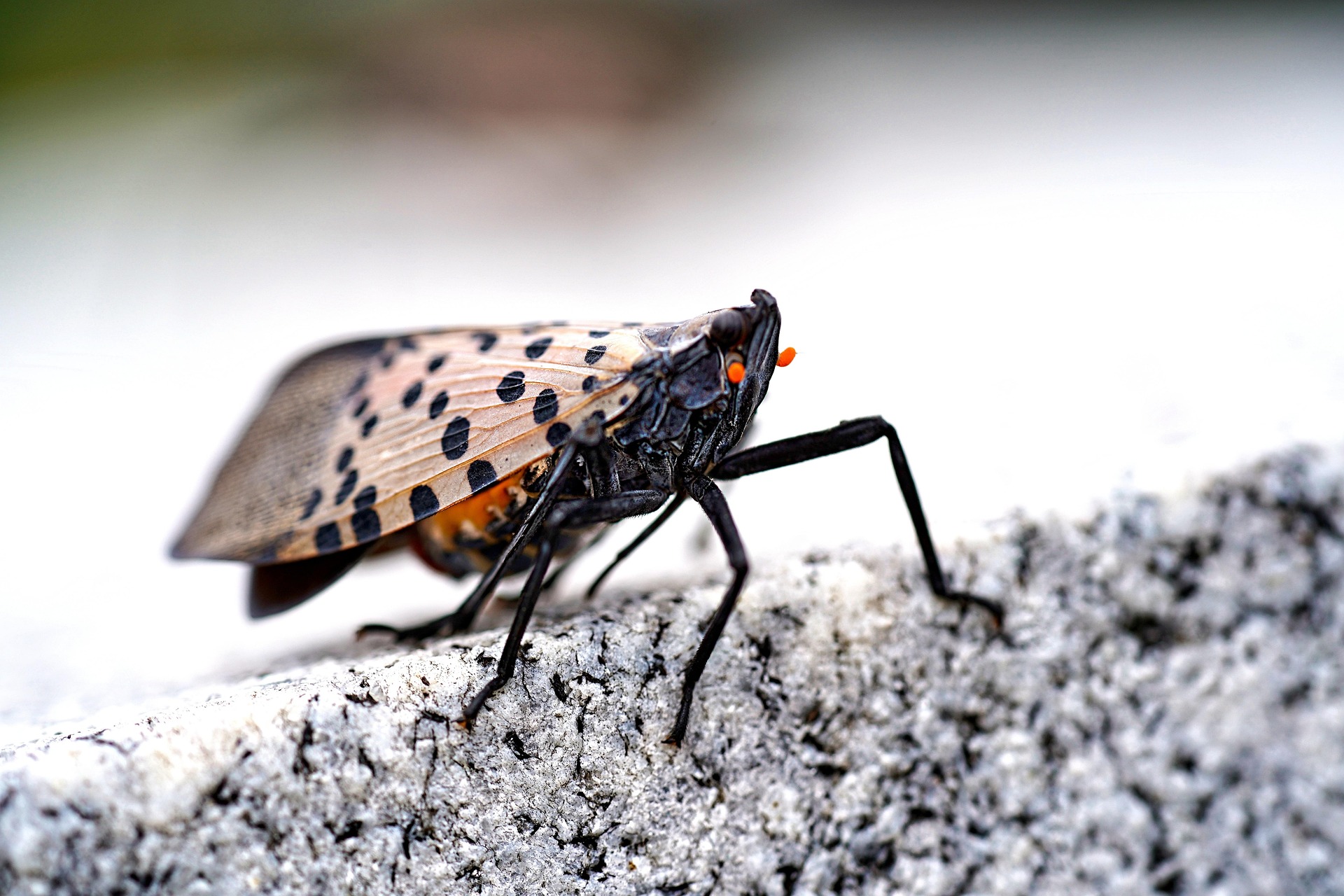
The incredible sense of smell possessed by dogs has made them valuable working companions for generations. From tracking people and finding missing objects to detecting specific substances, dogs can identify scents far beyond human capabilities. And now, that remarkable ability is being explored in the fight against an unwanted visitor: the invasive spotted lanternfly.
The spotted lanternfly has become a growing concern in parts of the United States since it was first detected in Pennsylvania in 2014. While this small insect might not seem particularly threatening at first glance, its feeding habits can cause problems for plants, agriculture, and the wider environment.
In this article, we look at how researchers and agricultural organizations have been interested in whether specially trained dogs could help control the spotted lanternfly.
The spotted lanternfly is an invasive insect native to parts of Asia. It feeds on a wide variety of plants and is particularly associated with tree-of-heaven, although it can also be found around crops, trees, and other vegetation.
The insect can be especially troublesome because of how easily it may be transported. Spotted lanternfly egg masses can be laid on trees as well as hard surfaces such as vehicles, outdoor furniture, equipment, and other objects.
This creates the possibility of eggs being moved unintentionally from one location to another. Egg masses can also be difficult for people to find. They may blend into their surroundings, making visual searches more time-consuming.
Dogs have powerful noses that allow them to distinguish between enormous numbers of different smells. With appropriate training, dogs can learn to recognize a particular target odor and alert their handler when they find it. The relationship between a dog and its handler is also an important part of successful detection work.
Research and field programs have explored whether this ability can be applied to spotted lanternfly egg masses. Detection dogs need extensive training and must be able to remain focused while working around distractions. Their motivation, confidence, and temperament can all influence how well they perform.
Different breeds and individual dogs have been bred for a wide range of jobs, from herding and retrieving to tracking and hunting. Modern detection work is another example of humans making use of abilities that dogs have developed alongside us.
As you know, dogs vary enormously as individuals. Some are naturally curious and spend every walk with their noses on the ground, investigating every interesting scent they encounter. While others would rather chase a ball, retrieve a toy, or keep an eye on everything happening around them.
Professional detection dogs are generally selected and trained for specific characteristics, including motivation, focus, and their willingness to work with a handler. That does not mean that an ordinary pet dog cannot enjoy scent work, though, as scent games and nose-work activities can be a fun way to provide mental enrichment.
Hiding treats or toys for your dog to locate around the house, for example, gives them an opportunity to use their natural scenting abilities. For many dogs, simply being allowed to investigate interesting smells can make a walk much more rewarding.
Spotted lanternflies are not the only invasive species where dogs have been considered useful. And the work involving the invasive spotted lanternfly is part of a much broader area of canine detection.
Detector dogs have been used in various agricultural, conservation, and biosecurity roles because of their ability to locate particular scents. Depending on their training, dogs may be able to help identify plants, insects, agricultural products or other targets.
The advantage of using dogs is quite straightforward. Where humans rely heavily on sight, dogs can search using scent. In situations where something is hidden, small, or difficult to distinguish visually, this can potentially provide another way of locating it.
Dogs still require specialist training; their performance can vary, and environmental conditions may affect their ability to work effectively. Research is therefore important in determining exactly how useful dogs could be in different situations.
If you live in an area where the spotted lanternfly has been reported, becoming familiar with the insect and following local guidance can be worthwhile. Dog owners should not expect their pets to identify lanternfly eggs simply because they have a strong sense of smell.
Detection dogs are specially trained to recognize specific target odors, and professional work involves considerably more than allowing a dog to sniff around outdoors. Keeping your dog supervised around unfamiliar insects is sensible too, particularly if your pet has a habit of eating whatever it finds.
If you believe you have found spotted lanternflies or an egg mass, it is generally better to follow guidance from your state agriculture department or local Cooperative Extension service rather than attempting untested treatments yourself.
The spotted lanternfly may be a small insect, but tackling invasive species can require some impressive tools. And the use of dogs to detect the invasive spotted lanternfly remains an interesting and developing area of research. There is potential for trained dogs to assist with locating egg masses and supporting monitoring efforts, particularly in situations where visual searches may be difficult.
Exactly how widely these methods could be used, however, depends on further research, training requirements and practical considerations. With the right training, the same sense of smell that makes your dog such an enthusiastic explorer could potentially help people locate an invasive pest and better understand where it is spreading.
For dog owners and breeders, perhaps the most fascinating part is simply seeing another example of what dogs are capable of. Our pets might spend their days sniffing trees, investigating mysterious smells in the backyard, and somehow finding the one crumb that fell beneath the kitchen table. But our beloved four-legged companions have an extraordinary nose with a much greater potential!
07 October, 2026