
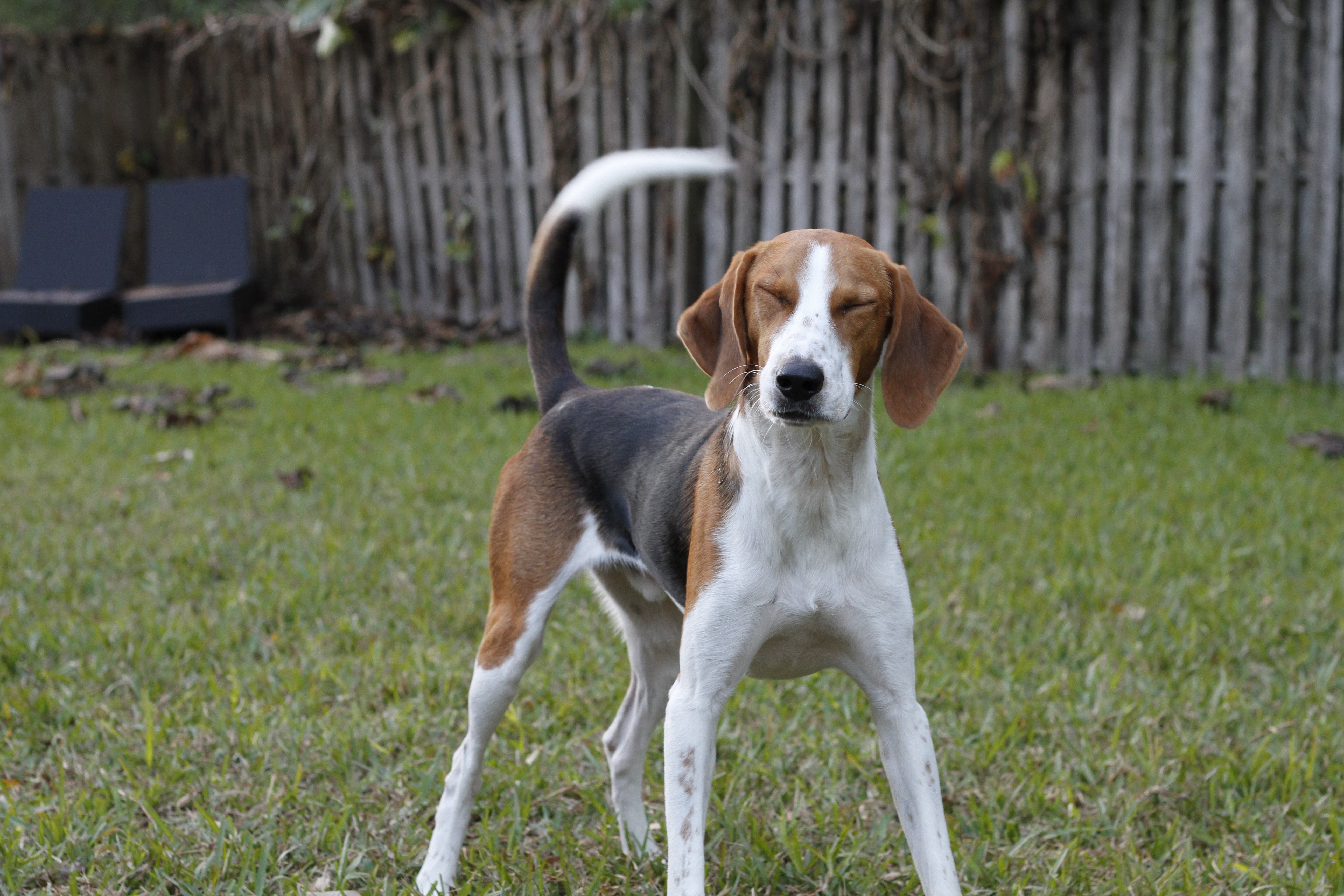
If you've ever wondered why the English Foxhound isn't a more familiar sight at dog parks, veterinary offices, or neighborhood walks across America, you're not alone. This elegant and athletic hound has an impressive history, a friendly personality, and plenty of qualities that make it a wonderful companion for the right household. Yet it remains one of the rarest breeds in the United States.
In fact, the English Foxhound held the distinction of being the rarest AKC registered breed in America in 2024. The picture changed in 2025, it moved up to number 187 out of 202 breeds. Which means it is still exceptionally uncommon but no longer technically the least popular breed. The Norwegian Lundehund claimed that position in 2025.
In this article, we take a look at why the English Foxhound is one of the least popular dogs in the USA.
The English Foxhound is a cousin of the American Foxhound (pictured). The breed wasn't originally developed to be a fashionable family pet, as its history is closely connected to traditional English foxhunting, where packs of hounds were expected to cover significant distances while following a scent. And this history helps explain a lot about the breed you see today.
An adult English Foxhound is typically 24 inches at the shoulder and weighs approximately 60 to 75 pounds. It has a powerful, athletic build, long legs, a deep chest, and the stamina needed for sustained activity. The breed's short, dense coat is relatively straightforward to maintain, making grooming considerably easier than with many longer-coated breeds.
For breeders, preserving those functional characteristics is an important part of responsible breeding. The English Foxhound isn't simply supposed to look like a traditional hound; its structure, movement, endurance, and temperament reflect generations of purposeful breeding.
Many Americans are looking for dogs that can comfortably adapt to suburban homes, moderate exercise schedules, and relatively compact living spaces. The English Foxhound, however, is a high-energy scent hound with a real drive for exploration. Once an English Foxhound gets hold of an interesting scent, you may discover that your previously obedient dog suddenly has a one-track mind!
This can, of course, be great enrichment and doesn't make the breed badly behaved. It means owners need to understand what they're bringing home and be prepared for consistent positive reinforcement obedience training. Their independent streak and strong hunting instincts can make training more challenging than with other breeds, but they are also known to be gentle and friendly and enjoy being with other dogs.
For the right owner, who understands the breed and enjoys lots of activity outside and has plenty of time for training, they can become a much-loved member of the family. English Foxhounds are generally social dogs and can enjoy spending time with people and other dogs. Their pack background means many thrive when they have plenty of companionship rather than being left alone for long periods.
Exercise is essential. A secure outdoor area, regular walks, opportunities to sniff, and mentally stimulating activities can all help satisfy a Foxhound's natural instincts. Owners should be especially careful with off-leash exercise. A Foxhound following an intriguing scent may travel much farther than expected, so reliable fencing and sensible management are extremely important.
Early socialization and positive, consistent training are essential for all puppies but should be tailored towards the needs of the individual and the breed. English foxhound owners should work with the breed's natural independence and reward desirable behavior consistently.
One advantage of owning an English Foxhound is that grooming is relatively uncomplicated. Its short coat generally needs only regular brushing to remove loose hair and dirt. Their ears deserve particular attention. Like other dogs with hanging ears, English Foxhounds can be susceptible to ear problems, so owners should make routine ear checks part of their care schedule.
Dental care, parasite prevention, regular veterinary examinations, appropriate nutrition, and maintaining a healthy weight are equally important. And the breed's typical life expectancy is around 10 to 13 years. Owners should also be aware that deep-chested dogs can be susceptible to gastric dilatation-volvulus, commonly called bloat, which is a potentially life-threatening emergency.
Interestingly, the AKC currently lists no recommended breed-specific health tests from the national breed club for the English Foxhound. That doesn't mean breeders should overlook health screening. Responsible breeders should still maintain appropriate veterinary input, evaluate breeding dogs carefully, understand their pedigrees, and prioritize sound temperament and overall health.
For breeders, the English Foxhound's rarity presents both an opportunity and a responsibility. Responsible breeding should focus on preserving the qualities that make the breed an English Foxhound in the first place: sound structure, stamina, appropriate temperament, and health.
Breeders should also be prepared to educate potential owners. Someone attracted to the breed because it is rare may not realize how much exercise, secure containment, training, and companionship an adult Foxhound requires. A responsible breeder will be willing to discuss the realities of life with the breed and advise potential owners accordingly.
Despite being labelled as America's "least popular dog," a position in the rankings reflects registration numbers, not a judgment on a particular breed of dog. The English foxhound is a breed that has plenty to offer the right person, from a friendly personality, a relatively easy coat to care for and a great enthusiasm for outside activities.
For prospective owners, the real question isn't whether the English Foxhound is popular, it's whether your lifestyle matches the breed. If you're active, enjoy spending time outdoors, have a secure outdoor space, and are prepared to work patiently with an intelligent and independent scent-driven dog, this uncommon breed could be an exceptionally rewarding companion!
11 November, 2026