
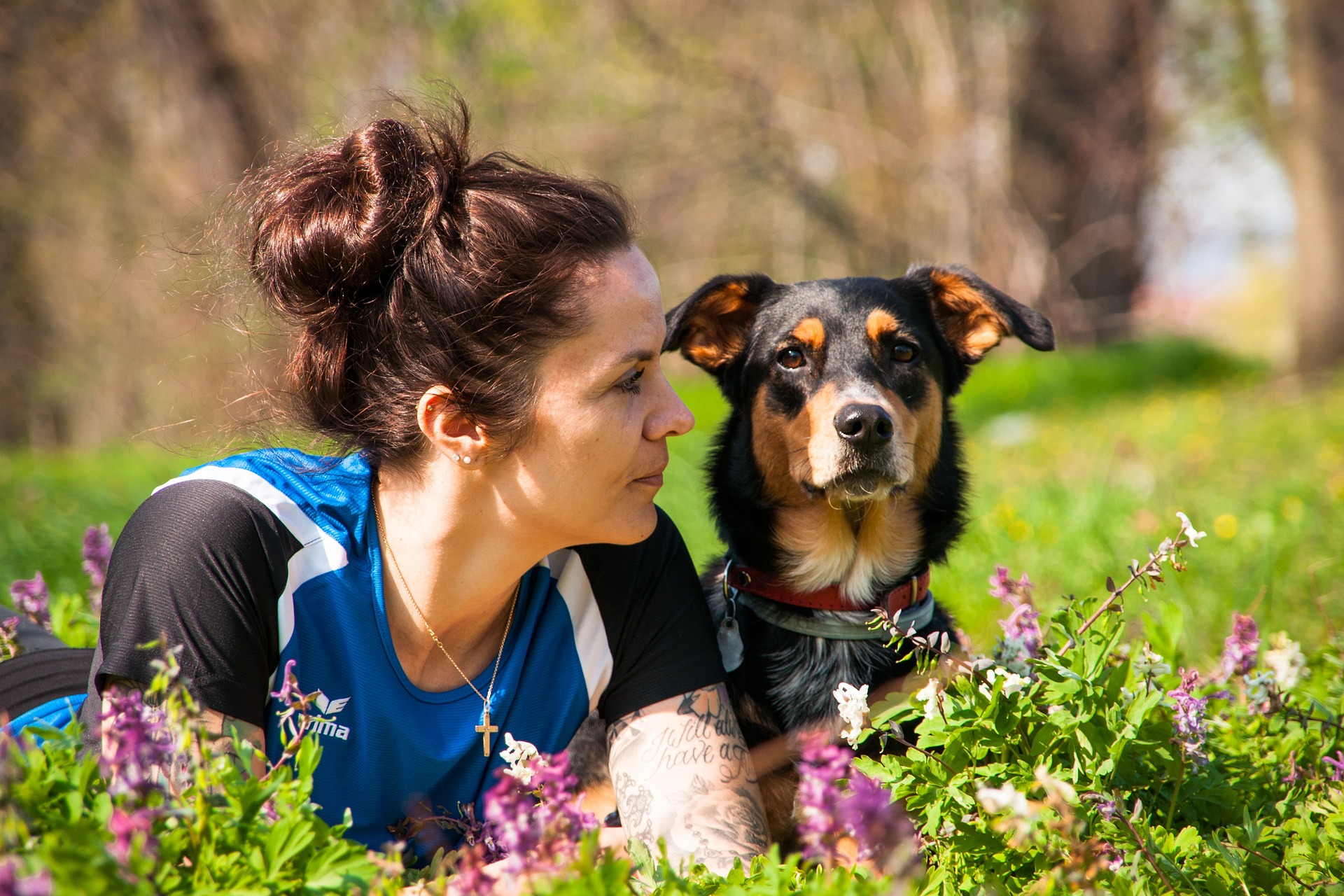
If you have ever had the feeling that your dog knows exactly what you are thinking, you might not be imagining it! Maybe your dog appears straight at your feet when you've had a difficult day. Or maybe they’ve somehow mastered the art of giving you a special look when you’re eating something they would very much like to share!
For dog owners, it can feel as though our four-legged companions know us almost as well as we know them! And it can make us wonder how well our dogs really do know and understand us.
In this article, we take a look at how dogs really are remarkably good at reading the humans around them.
Dogs are experts at picking up on changes in human behavior. They may not understand every word you say, but they are paying attention to much more than just your voice. Your facial expressions, posture, movements, tone of voice, and even your general behavior can all provide clues about how you are feeling.
This is one reason your dog may behave differently when you are cheerful compared with when you are stressed or upset. Research has shown that dogs can respond differently to genuine human emotions and that dogs behave differently depending on whether their owners are happy or sad.
In other words, your mood may be influencing your dog more than you realize. And if you have ever tried training your dog after a particularly exhausting or stressful day, you may already have your own evidence!
It gets even more interesting though as recent research has also found that dogs respond to different facial expressions. That doesn't mean your dog understands emotions exactly as you do. But it does suggest that dogs have developed sophisticated ways of processing information from us.
Dogs are fantastic observers of routine. To your dog, your routine is a sequence of clues. Your dog may have learned that when you put on a particular pair of shoes, a walk is coming; and when you brush your hair, you might be about to leave the house. Or, when you open the kitchen cupboard at a certain time of day, something tasty could be about to appear.
And if you are a puppy breeder or experienced dog owner, you will probably recognize just how quickly dogs can learn these patterns as dogs are constantly collecting information about what happens next.
This is particularly important for owners to understand. Dogs can be sensitive to changes in human emotional states, including stress. They don't necessarily need you to tell your dog you’re having a terrible day for them to notice something is different. Your body language may change, your voice may sound different, or you may move differently around the house.
There is also growing evidence that dogs can detect emotional information through scent as dogs can distinguish between different emotional odors produced by other dogs. For dogs, scent is extremely important to canine social communication.
For your own dog, this means their world is filled with information you may not even realize you are giving them. And as a dog owner, you can see this on a day-to-day basis. When your dog comes up to you, they sniff you; when you take your dog on a walk, they will often sniff places where other dogs have been. This all helps them understand what's going on in the world around them.
While your dog may be surprisingly good at reading you, humans aren't always nearly as good at reading dogs. We can be guilty of assuming that a wagging tail automatically means happiness, for example, when canine body language is much more complicated than that.
A dog's posture, facial expression, ears, tail, movement, and the situation around them all matter. A dog who is uncomfortable may look very different from a dog who is relaxed, even if both happen to wag their tails.
This is especially important for breeders and owners. Learning to recognize subtle changes in behavior can help you understand what your dog is communicating before a situation becomes overwhelming for your puppy.
Sometimes the biggest clue isn't what your dog is doing, but what has changed. Is their body suddenly tense? Have they stopped taking treats? Are their ears positioned differently? Are they sticking unusually close to you? Learning your individual dog's normal behavior makes these small changes much easier to spot.
The good news is that all those ordinary moments you spend with your dog are essential for building a loving relationship and familiarity. By spending time together, your dog learns what to expect from you, and you learn their preferences, habits, and quirks. Over time, you develop something of a shared language.
You may know that a particular little huff means your dog wants attention. They may know that your certain tone means it is time to settle down. Neither of you needs to speak the other's language perfectly, but instead simply learn from one another. A strong, positive relationship can help dogs feel secure, while everyday interactions give them more opportunities to learn how their owner behaves.
Your dog likely knows you better than you think, but perhaps not in quite the way we sometimes imagine. Dogs are incredibly observant animals who have become exceptionally good at reading the people they live with, including your mood, facial expressions, routines, habits and even scent!
So next time your dog appears beside you when you are having a rough day, don't be too quick to dismiss it as coincidence. They may have noticed dozens of tiny signals that you weren't even aware you were giving off. After all, you spend a significant part of your life learning to understand your dog. And it turns out they have been studying you, too!
12 October, 2026