
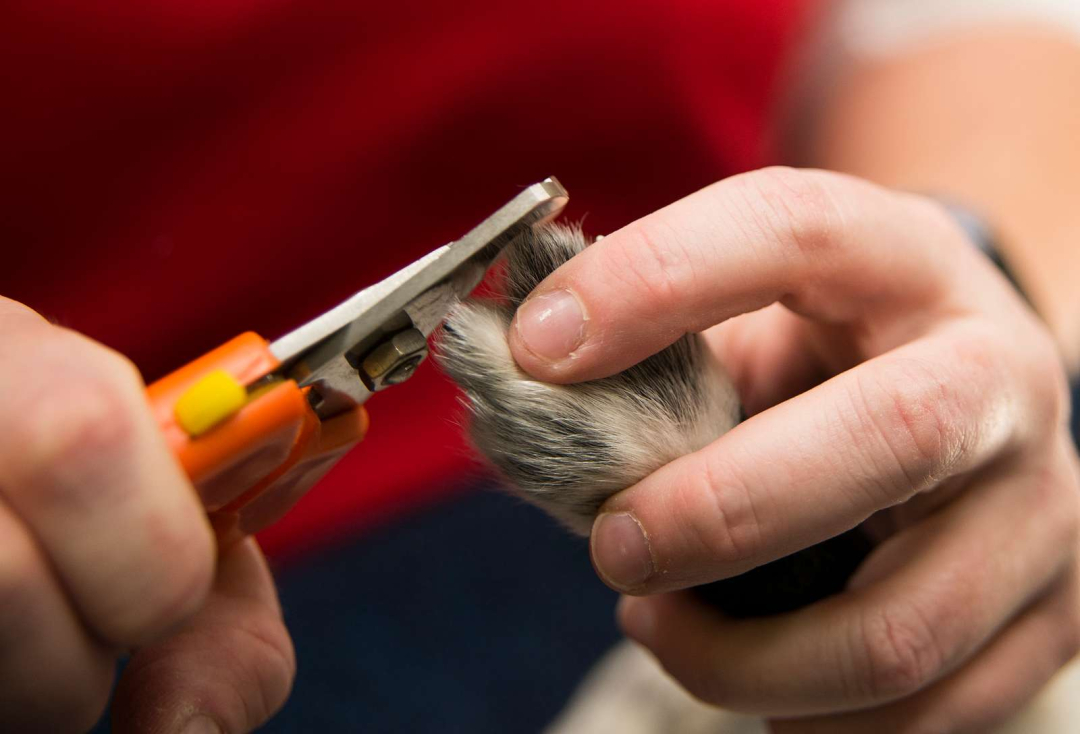
As a dog owner, you might find that as soon as you get out the dog nail clippers, your dog runs the other way! And you're not alone, nail trimming is one of the most common struggles for dog owners in the U.S. Some dogs squirm and wriggle, others pull their paws away. Some may even growl or snap out of fear. However, with the right approach and techniques, most dogs can learn to tolerate, and even calmly accept, their nails being trimmed.
In this article, we take a look at how to cut an uncooperative dog’s nails safely, gently, and with as little stress as possible for you both.
Keeping your dog’s nails trimmed isn’t just about appearance. Overgrown nails can affect how your dog walks, cause joint strain over time, cause nails to split or crack painfully, and in extreme cases, uncut nails can curl into the paw and become very painful and uncomfortable.
Most dogs need their nails trimmed every 3 to 4 weeks, although very active dogs who walk on pavement may wear them down naturally. A dog’s nails never stop growing, so nail care is a lifelong part of responsible dog ownership. You might regularly take your dog to the local dog salon and have their nails trimmed by a professional, but if you are trimming your dog's nails yourself, let's take a look at how you can do so safely and comfortably.
If your dog hates their nails being trimmed, there’s usually a reason. They could have had a painful past experience, like cutting the quick, they could have sensitive paws, a fear of being restrained, if a grinder is used, they might not like the sound, or they might just not have been exposed to nail clipping as a puppy.
Dogs are protective of their feet. Being held still while someone handles their paws can feel threatening if they don’t understand what’s happening. It can be a challenge for some dog owners to let their dog wipe their muddy paws! The goal is to help them feel safe and comfortable with the process.
When considering how to cut an uncooperative dog’s nails, one of the first things to consider is that having the right equipment makes a big difference. For nail clippers, you should select the right clippers for your dog. Choose scissor-style clippers for large breeds and guillotine-style clippers for small to medium dogs as a general rule.
Many owners prefer a dog nail grinding tool. Grinders file the nail gradually instead of clipping it in one cut, which can feel less intimidating for some dogs. If you accidentally cut the quick, which is the sensitive inner part of the nail, you can purchase specialist products to stop the bleeding. Always have this nearby before you begin, just in case.
Inside each nail is a blood vessel and nerve called the quick. On light-colored nails, you can usually see it as a pink area. On black nails, trim small amounts at a time. When you see a grayish-white center with a tiny dark dot, stop. Cutting the quick is uncomfortable and can make your dog fearful next time. So be slow and cautious when you cut your dog’s nails.
If your dog reacts to the sight of clippers, place the clippers on the floor, let your dog sniff them, and then immediately offer a high-value treat. This uses positive reinforcement to train your dog to see nail trimming as a positive experience. Repeat this several times over a few days to teach your dog that nail tools mean that treats come!
Before trimming, your dog also needs to feel comfortable with you touching their paws. Practise letting them gently touch one paw, then give a treat, hold their paw for one second, then offer another treat. You can gradually increase the time you hold their paw over several obedience training sessions. If your dog pulls away, stay calm and try again later.
Then introduce the sound of the clippers or the grinder and reward calm behavior. Once they are happy with these initial steps, you can try trimming their nails. For very resistant dogs, trim just one nail, offer praise and a reward, then stop. Even if you just do one nail per day at first. There’s no rule that says all four paws must be done in one sitting. Short, positive sessions build trust much faster than long, stressful ones.
Many dogs cooperate better with a tasty distraction, such as a lick mat with peanut butter, a frozen treat toy, or small, continuous treats from a helper. This can help keep the whole experience fun, rewarding, and calm.
If your dog shows signs of aggression, stop immediately. Growling is communication, not bad behavior. Your dog is saying they’re uncomfortable. In this situation, go back to desensitization steps, work through them at a slower pace, and if you are really still struggling, consider speaking with a dog behavioral specialist or your local veterinarian.
Professional groomers are trained to handle anxious dogs safely. If you’re feeling unsure, scheduling a quick nail trim appointment every few weeks can take the pressure off.
Cutting an uncooperative dog’s nails can be overwhelming, but it doesn’t have to stay that way with gentle positive reinforcement training and building your dog's confidence gradually. When considering how to cut an uncooperative dog’s nails, focus on short sessions, lots of treats, gradual exposure, and a calm energy.
Most dogs improve significantly when they feel safe and rewarded. With time, practice, and patience, nail trimming can become just another normal part of caring for your dog and help you build a loving bond.
27 December, 2022