
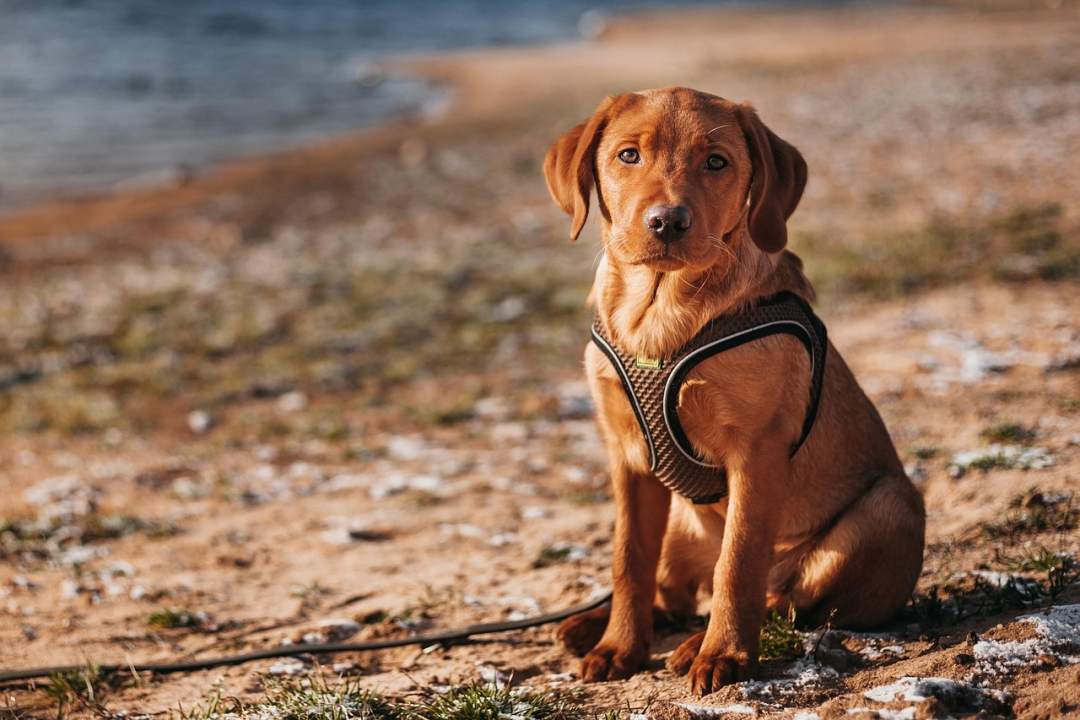
A new puppy joining your family is a wonderful, exciting time, and there are lots of things to think about! One important task that requires thought and effort is dog obedience training, which can be daunting for new puppy owners.
Teaching a dog to sit is one of the most vital skills to teach a dog and also one of the simplest and easiest dog commands to start with, helping you get underway with your positive reinforcement training for your puppy. This uses a reward-based method and can be used for both puppies and adult dogs.
The sit command is easy to learn and quite a natural command for dogs to learn. It can help them to stop and calm down when they get overexcited. Once your dog is sitting nicely, you can then include other commands such as ‘stay’ or ‘down’. It’s a good way to encourage good behaviour when you visit the vet or dog groomers as well.
First, select a good-quality treat for positive reinforcement; common choices include cheese, chicken, or commercial treats. You might choose to use a clicker or praise with affection, like a tummy rub or phrase. You will also need a suitable collar and leash.
Choose a good, quiet space to train your puppy, with few distractions. Make sure they have been out to the toilet, are fed, and in a good mood. Training should last about 5 to 10 minutes to start with, and you can increase the time as your puppy gets older.
First, get your dog's attention, hold a treat in your hand, and let them smell it. Get them interested and focused on you. If your dog naturally sits, you can then give them the treat. Or you can use a technique where you move the treat over their nose and down their back to see if they sit. Use a slow movement.
When the dog's bottom touches the ground, then say the word ’sit’ in a positive voice. You can then either use your clicker or give the puppy the treat. Then your puppy will connect the command ‘sit’ with a treat.
Repeat a few times and practise this daily so your dog is really getting the hang of the command. You can choose to use a hand signal instead, or in addition to the word ‘sit’. With practice, your dog will soon be sitting with ease.
You might come across some common problems when teaching new dog commands. If they jump for the treat, lower the treat and move more slowly. If they back away from you, try to get them to sit in front of a wall. If they are easily distracted, practice in a quieter environment.
When they can sit well in a quiet place, you can then practise the command in a noisy, distracting location, like in a park. If they aren’t responding to the treat you’ve chosen, try something different. Stay positive and keep sounding enthusiastic.
Here are some times in which the command ‘sit’ can be good to practise:
Other commands you can try teaching your puppy are:
Don't punish the dog or sound cross if they get it wrong. Try to ignore behaviour you don't want and only give praise and a treat if the dog responds as you want them to. Be careful not to provide the treat for trying as well! Avoid pushing, yelling, or punishing your dog. Give them plenty of time to learn the command and be patient.
Also, be mindful of your dog’s breed. Some breeds are better at learning commands than others, and this is the same for individual puppies as well. They're not all the same, so tailor training sessions to be suitable for your puppy. Encourage them to learn, but it should be a positive experience for you both.
Don't forget to move into places with greater distractions gradually, perhaps try in your local park when it’s quiet and then, when your dog can manage that, visit the park when it is much busier.
It’s vital to teach your dog how to ‘sit’. It’s a basic command to teach your puppy that can be helpful in many ways and is a good first command to build on others. Positive reinforcement training is a great way to build a trusting bond between you and your puppy. You will find that your puppy can be used in a variety of situations, such as meeting people and going to the veterinarian. It can help make meal times and walks easier as your dog gets used to sitting to wait for your next command.
When your puppy can sit, you will be on the first step towards your puppy growing into a well-behaved adult dog. This simple command can lay the foundation for more obedience training. It’s important that you get the whole family involved so everyone knows how to give the ‘sit’ command and that your puppy responds to others as well. And make sure your puppy learns to listen to you when there are lots of distractions around them!
Be confident and get going with your puppy training - you can do it and will both enjoy the process!
10 September, 2025