
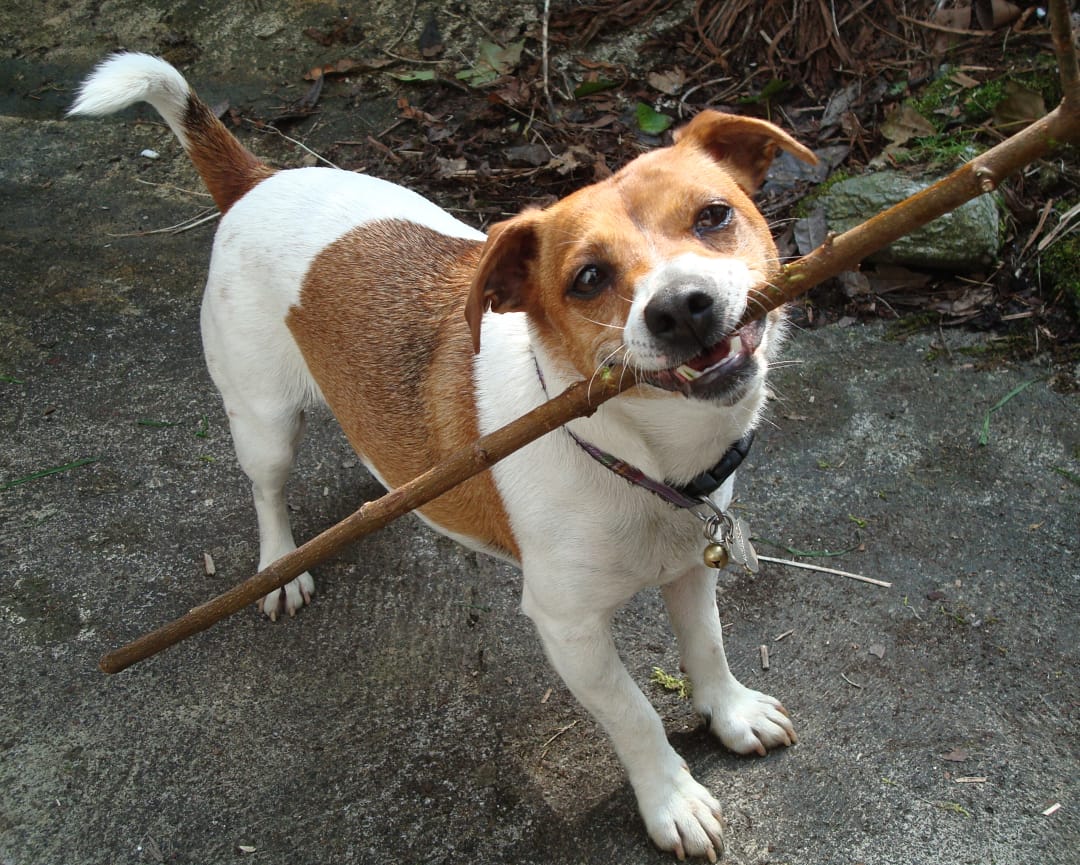
As a dog parent, you will likely have gone for a dog walk, and either watched your dog, or someone else's, proudly trotting along with a stick clamped in their mouth! For many dogs, sticks seem to be irresistible treasures; they can be collected, chewed, carried, and sometimes even guarded like prized possessions.
In this article, we take a look at why dogs love sticks so much. What’s behind this canine behavior, and consider some interesting insights that go beyond the obvious.
Wild canines rely on their environment for survival. Although today’s dogs are domesticated, many of their wild instincts remain intact. Picking up and carrying objects, like sticks, can be traced back to hunting and scavenging behaviors. In the wild, canines carry bones, prey, or useful materials back to a safe spot. To your dog, a stick may mimic these objects. It’s lightweight, easy to carry, and satisfying to hold. This makes it an instinctive favourite.
One simple explanation for why dogs like sticks is that they look and feel like bones. Dogs are naturally drawn to chewable items. Bones have been linked to reward and nourishment for a long time. Sticks offer a similar size, firmness, and resistance. While they don’t provide the same nutritional value, the physical sensation can still be rewarding. For many dogs, chewing on a stick is similar to chewing on a bone.
Dogs experience the world very differently from humans. While we rely heavily on sight, dogs use their mouths and noses to explore their surroundings. Sticks are everywhere! They can be found in parks, on sidewalks, in forests, and in your backyard. And they carry a wealth of sensory reward for your dog.
Each stick carries a wealth of information for your dog; where it came from, what animals passed by, and whether it’s been exposed to water or soil. For curious dogs, especially puppies, picking up a stick is like reading a detailed story about their environment.
From a dog’s perspective, sticks are essentially free toys provided by nature. They’re easy to pick up, fun to carry, and ideal for games like fetch. Many dogs instinctively choose sticks that are just the right size for their mouths, that are long enough to carry but not too heavy.
This behavior reflects both intelligence and playfulness. Dogs quickly learn what works best for their comfort and enjoyment. For breeds that are especially playful or retrieve-focused, sticks can become a go-to item during outdoor time and a really exciting part of outside time with their family.
Chewing isn’t just a pastime for dogs; it’s also a biological need. It helps relieve boredom, reduce anxiety, and even support dental health by scraping away plaque. Sticks provide a satisfying texture that many dogs enjoy. The slight resistance and ability to break down under pressure can make chewing feel rewarding. Additionally, chewing can release feel-good chemicals in the brain, which can help dogs relax. Chewing and ingesting materials can be soothing for dogs.
Dogs have an extraordinary sense of smell, which is far more powerful than humans. What might seem like an ordinary stick to us can be incredibly enticing to a dog. Sticks often carry earthy, organic scents, as well as traces of other animals. This makes them especially appealing, as dogs are naturally drawn to complex and layered smells. In some cases, a stick might even smell like prey or another animal, increasing its appeal.
Many dogs do seem to enjoy the taste of sticks. The mild, earthy flavor combined with the texture can be appealing. However, it’s less about flavor in the human sense and more about the overall sensory experience.
While many dogs simply carry or chew sticks, others actually eat them. This behavior can be driven by several factors. Such as texture and taste as some dogs enjoy the fibrous, woody texture. Dogs without enough mental or physical enrichment may turn some dogs to stick-eating as an outlet. However, eating sticks is not considered safe and should be discouraged.
If your dog suddenly starts obsessively chewing or eating sticks, it could signal an underlying issue. While it may still be harmless curiosity, there are a few possibilities worth considering. They might have nutritional gaps in their diet. Some dogs seek out unusual items if their diet is lacking certain nutrients. Pica is a condition where dogs compulsively eat non-food items.
Your dog might be suffering from anxiety or stress. Behavioral changes, like suddenly eating sticks, can often be linked to emotional factors. If the behavior is new, frequent, or intense, it’s a good idea to consult a veterinarian. They can help rule out medical causes and recommend dietary or behavioral adjustments.
Modern veterinary advice is very clear. that sticks are not safe chew toys. While playing with a stick occasionally is usually harmless under supervision, chewing and especially eating sticks can pose serious risks. It could cause splinters where wood can break into sharp fragments that may lodge in the mouth, throat, or digestive tract. These splinters can cause cuts, infections, or abscesses.
Sticks can also be a choking hazard if large pieces become stuck in the throat. Sticks can also cause intestinal blockages. If wood is swallowed, it may not pass through the digestive system easily. Because of these risks, most veterinarians recommend avoiding sticks altogether as chew items.
Instead of letting your dog chew on sticks, consider safer, purpose-made options such as durable rubber chew toys, nylon bones designed for dogs, dental chews approved by veterinarians, or rope toys for supervised play. These alternatives are specifically designed to withstand chewing without splintering or breaking into dangerous pieces.
Dogs like sticks for a combination of instinct, curiosity, playfulness, and sensory enjoyment. While sticks may be fun, they aren’t the safest option for your dog. Encouraging safer alternatives while still allowing natural play and exploration is the best way to keep your dog happy and healthy.
12 January, 2023