
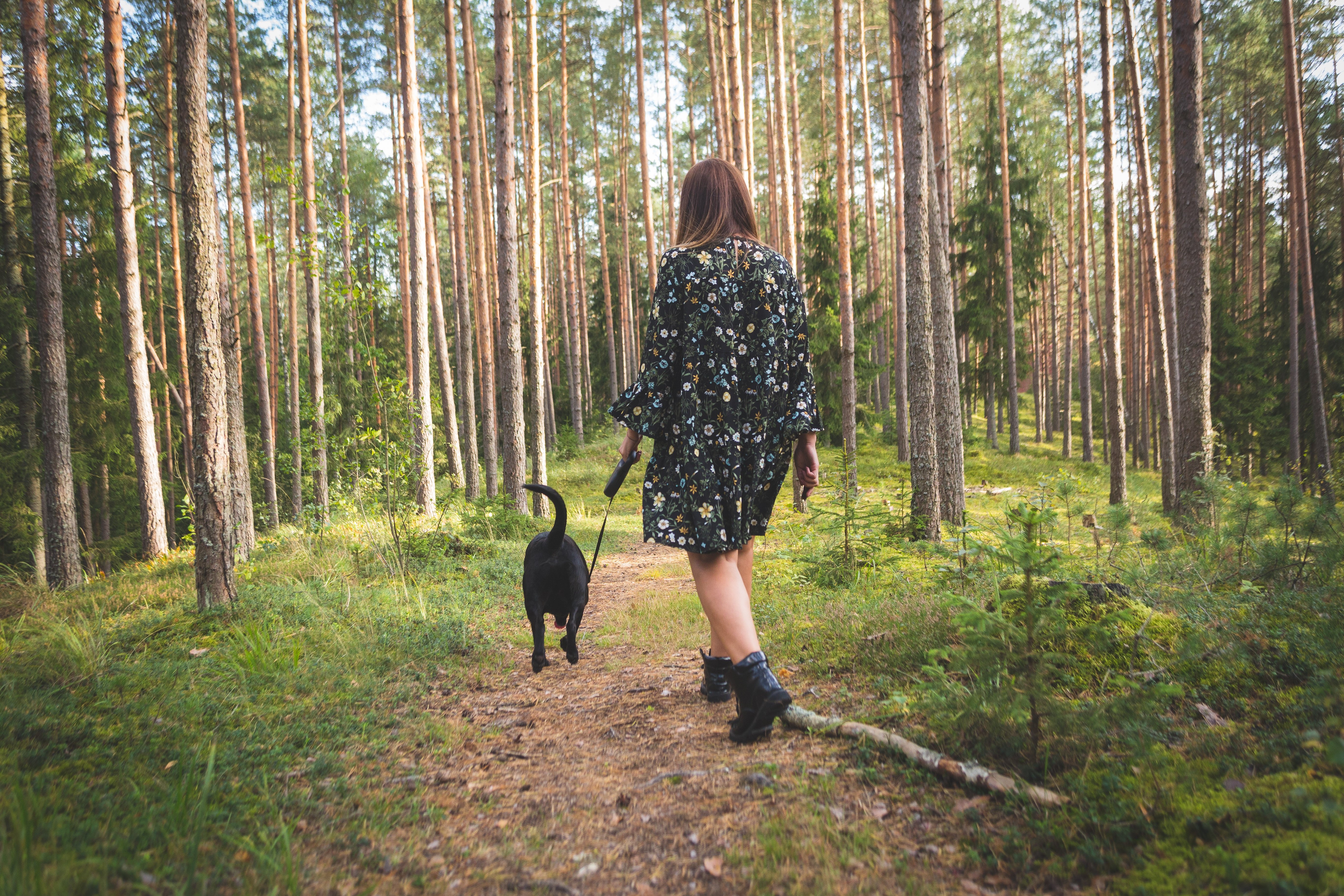
As a dog owner, you’ll be very used to going on dog walks, and for most dogs, it’s one of the most exciting activities and for you, a great opportunity to bond with your pup. Dog walking, for most, follows a familiar routine of leashing up, choosing a route and picking a pace. But in 2026, that mindset is being turned on its head as dog owners begin to embrace dog-led walks.
Across parks, sidewalks, and neighborhoods, a quieter change is taking place, one led not by humans, but by dogs themselves! In this article, we take a look at dog-led walks, where sniffing trumps speed, curiosity replaces control, and the destination matters far less than the experience along the way. So how can you embrace this new trend?
Traditional walks often mirror human fitness goals, with a brisk stride, minimal stops, occasional chats, and a general focus on distance or time. Dogs, however, aren’t built to measure success in miles. Their world is driven by scent; they have an amazing sense of smell that takes in information we can’t even begin to perceive. And because of a dog's curiosity, dog owners are beginning to engage with dog-led walks.
A “sniffari,” as many pet parents now call it, flips the script. Instead of urging your dog forward, you let them pause, investigate, zigzag, and take in their surroundings at their own pace. It’s slower, but far from lazy. In fact, these slower walks can be more stimulating for your dog than a fast-paced jog around the block.
A dog’s sense of smell is their primary way of understanding the world. Every patch of grass, lamppost, or fire hydrant provides lots of information, such as who’s been there, how long ago, and even emotional cues left behind by other animals. When dogs are rushed through walks, they miss out on this essential form of enrichment. Over time, that can lead to frustration, boredom, and even behavioral issues at home.
Dog-led walks can be a really great way to enrich your dog's life by giving dogs the chance to engage their brains fully. Mental stimulation can be just as tiring as physical exercise from a dog walk. That means a 20-minute sniff-focused walk might leave your dog more content than a 40-minute power walk.
Recent shifts in animal behavior research have highlighted the importance of enrichment activities for dogs. Dogs that are allowed to sniff freely tend to show lower stress levels and improved overall well-being. Sniffing activates large portions of a dog’s brain, encouraging problem-solving and emotional regulation. It’s not just about curiosity; it's about cognitive health. As a dog owner or breeder, you will understand the importance of prioritizing both physical and mental wellness for your dog.
Dog-led walks aren’t just beneficial for dogs; they change the experience for humans, too. When you stop trying to control the pace and start observing your dog’s behavior, something shifts. You begin to notice the small things: the way their ears perk up at a distant sound, the intensity of their focus on a scent trail, the subtle cues they give when they feel safe or uncertain.
It becomes less about “walking your dog” and more about being with your dog. For many pet parents, this creates a deeper sense of connection and the opportunity to bond with their pup. You’re no longer dragging your dog along your agenda; you’re sharing an experience shaped by their instincts.
Even if it’s a dog-led walk, dogs still need physical activity. Dog-led walks aren’t about eliminating movement; they’re about balancing it with mental enrichment. High-energy breeds, in particular, will still benefit from structured exercise like running, fetch, or agility work. The difference is that these activities are now being complemented by slower, more exploratory walks rather than replaced entirely.
It’s more of an idea to slow down the pace of a dog walk and let your dog enjoy what they do best, which is sniffing! It might seem unproductive to us while your dog spends two full minutes sniffing a bush, but that pause is important for your dog.
Dog-led walks encourage patience, not just with your pet, but with yourself. They create space to unplug, observe, and be present in a way that fast-paced routines rarely allow. It’s a small act, but one that reflects a larger cultural movement toward mindfulness and intentional living for both you and your dog.
If you’re used to structured walks, transitioning to a dog-led approach might feel unfamiliar at first. Start by choosing a safe, low-traffic area where your dog can explore without constant redirection. Use a standard leash or a slightly longer one to allow for more freedom, and let your dog set the pace.
Resist the urge to hurry them along unless necessary. If they want to stop and sniff, let them. If they want to double back, consider allowing it. You don’t have to give up all structure; basic leash manners still matter, but the goal is to loosen the reins and allow your dog to explore the world around them.
Some people worry that dog-led walks will encourage pulling or make dogs harder to control. However, when dogs feel that their needs are being met, especially their need to explore, they’re less likely to pull out of frustration. They become more relaxed, more focused, and more responsive over time. Try to focus on the overall well-being, enrichment for your dog that you're providing by slowing down.
In 2026, the humble dog walk is no longer just about steps, speed, or structure. It’s about connection, curiosity, and giving dogs the freedom to engage with their environment in a meaningful and enriching way. Dog-led walks allow our dogs to enjoy sniffing and exploring during their walk and experiencing the world. And sometimes, the best thing we can do is simply follow their lead!
28 May, 2026