
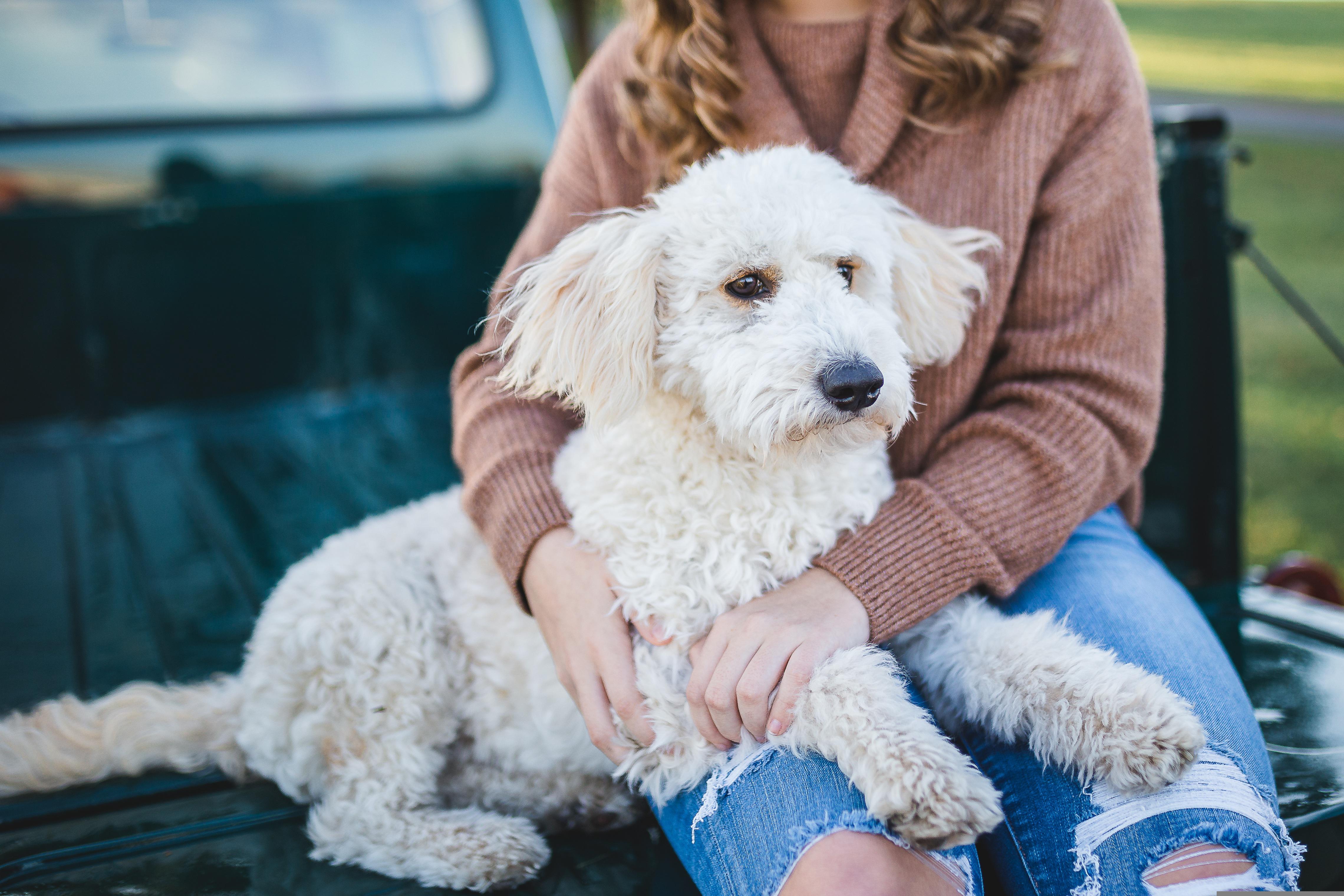
You’ve probably seen it happen when your dog meets someone new and instantly leans in, tail wagging, ready for affection, and you wonder if your dog already knows this person. Or they might do the opposite, hanging back, watchful, maybe even wary. And you might consider what your dog knows that you don’t.
Many dog lovers believe their pets have the ability to read people. If you’re wondering, can dogs tell if you’re a good person? While dogs can’t measure morality in the human sense, research suggests they can pick up on cues that help them distinguish between kind, trustworthy individuals and those who may not have the best intentions.
In this article, we take a look at whether or not a dog can tell if you’re a “good person.” The answer is not exactly, but what they can do instead is just as fascinating. Let’s take a look at this interesting aspect of dog communication and behavior and see what it might mean for dog owners and how we should behave as we meet other dogs!
Dogs are experts at reading our behavior, expressions, and tone of voice. Unlike humans, who often rely heavily on language, dogs are tuned into nonverbal communication, like body language. They notice subtle shifts in posture, eye contact, and even the way someone moves their hands. These micro-signals can reveal a lot about a person’s emotional state and intentions.
For example, a relaxed posture, soft voice, and slow movements tend to signal safety. While to a dog, tension, erratic behavior, or forced interactions can signal the opposite. Dogs are able to process these cues quickly, often faster than we consciously do.
You can say all the right things, but if your tone doesn’t match, your dog will notice. Dogs are highly sensitive to vocal cues. Dogs process tone and emotional content in ways similar to humans, so a warm, friendly tone tends to attract them, while a harsh or inconsistent tone can make them uneasy. This is one reason dogs often seem to “like” certain people immediately. It’s not about the words being spoken; it’s about how those words are delivered.
Have you ever noticed your dog acting differently when you’re stressed, upset, or anxious? Dogs are incredibly attuned to human emotions, it’s not your imagination. They can detect changes in facial expression, body language, and even scent!
For example, when humans experience stress, our bodies release different hormones, which can subtly alter our scent. Dogs, with their powerful noses, can pick up on these chemical changes. This ability helps them respond to emotional states, so a calm, grounded person may feel “safe” to a dog, while someone who is tense or agitated might trigger caution.
From a dog’s perspective, one of the clearest signs of a “good” person is consistency. Someone who behaves predictably, for example, offering gentle interactions, respecting boundaries, and responding calmly, becomes easier for a dog to trust. On the other hand, unpredictable behavior can be confusing or even frightening. This is why dogs sometimes take longer to warm up to certain individuals. It’s not necessarily a moral judgment; instead, it’s a matter of reliability.
Dogs have strong associative memory. If they’ve had a positive experience with someone, they’re likely to approach that person again with enthusiasm. This is how positive reinforcement training works. Negative experiences, however, can leave a lasting impression.
This memory isn’t just about individuals; it can extend to patterns. For example, if a dog has had repeated positive interactions with people who behave in certain ways (calm, patient, gentle), they may generalize that preference to others who display similar traits. Dogs can, in this way, develop their own version of a “type” of person they trust.
Some studies suggest that dogs can recognize when a human is being unreliable. When dogs are repeatedly misled they will lose trust, or get bored and realise they are not being a reliable human. It’s like if you’ve seen someone pretend to throw a ball to a dog, once they realise they are being ‘tricked’ they will stop expecting the ball. Dogs can assess credibility based on past behavior and while this isn’t the same as detecting lies in a moral sense, it does indicate that dogs are sensitive to honesty and reliability.
As impressive as these abilities are, it’s important not to overstate them. Dogs are not able to judge concepts like ethics, integrity, or character in the way humans do. Their “judgments” are based on observable behavior, emotional cues, and past experiences, not abstract principles. A dog might distrust someone who feels nervous around animals, even if that person is perfectly kind. And a confident but unkind individual might initially win a dog over with the right tone and body language. In other words, a dog’s perception is insightful, but not infallible.
Understanding how dogs evaluate people can help us become more mindful in our interactions with dogs. And if you want a dog to feel comfortable around you, focus on the basics such as moving calmly and avoiding sudden gestures, using a gentle, consistent tone, letting the dog approach you rather than forcing interaction, and respecting their space and signals. These behaviors will help make you more approachable to dogs as they identify behaviors that humans associate with kindness and trustworthiness.
Dogs are remarkably skilled at reading the signals that often align with being a good person, such as kindness, patience, consistency, and emotional stability. They notice how you act, how you sound, and how you treat others. They remember what they’ve experienced. And they respond accordingly.
So when you see your dog enthusiastically meeting a passerby like they’re a friend they know, your dog is offering an unfiltered reaction to the energy and behavior you bring into the world.
01 June, 2026