
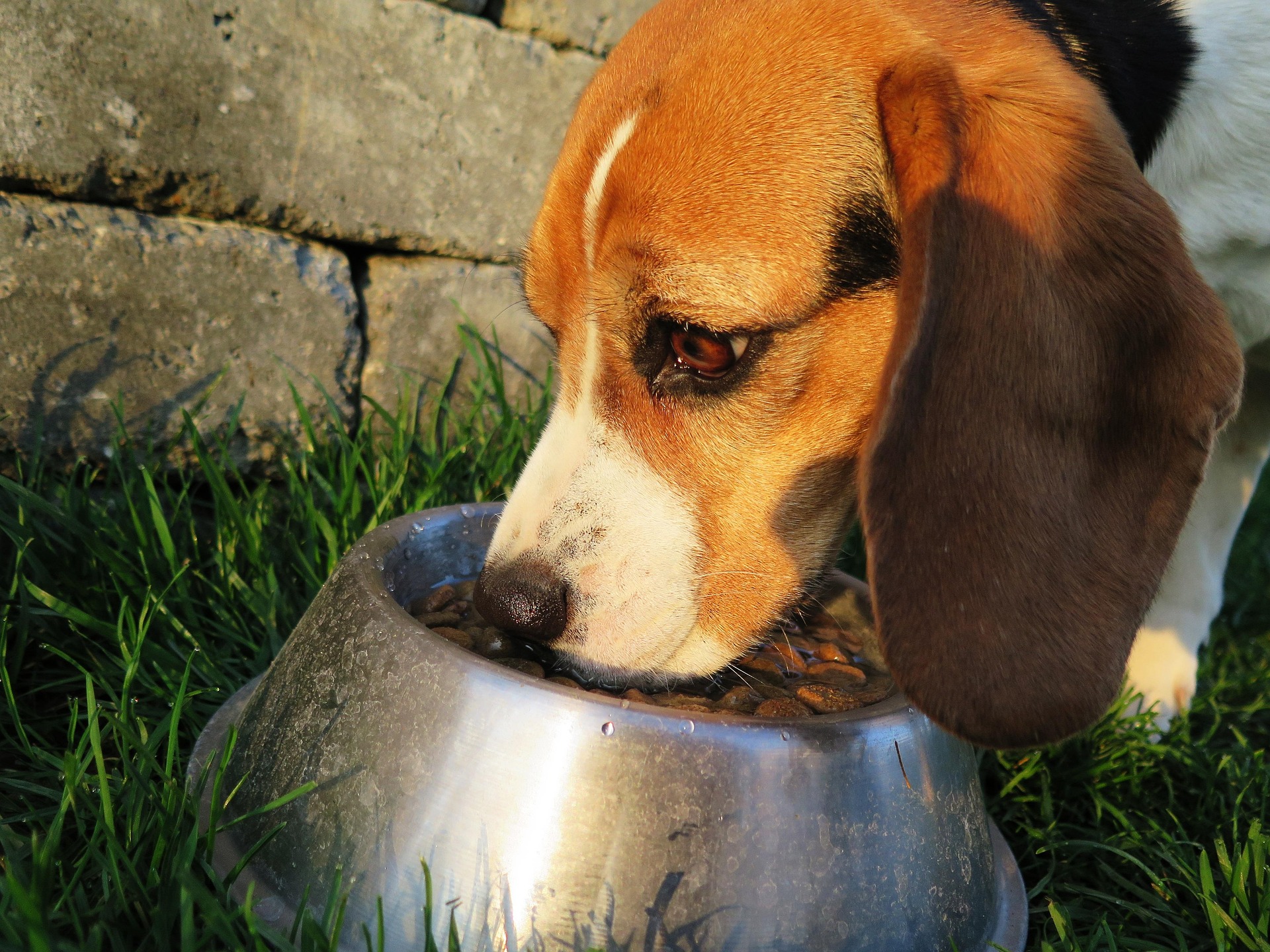
Dogs are often extremely motivated by food, and that can be a wonderful advantage for positive reinforcement obedience training. A tasty treat can turn a short training session into something your dog genuinely wants to participate in.
However, that enthusiasm can sometimes lead to unwanted habits. Begging at the dinner table, jumping up when food is being prepared, stealing from kitchen counters, or becoming overly excited at mealtimes can all be frustrating. Some dogs can also become uncomfortable when people approach their food, treats, or chews.
In this article, we take a look at how you can teach your dog good behaviour around food with patience, consistency, and plenty of positive reinforcement.
Your dog's normal mealtime is a good place to start when teaching good behavior around food. If your dog becomes extremely excited as soon as they see their food bowl, introduce a simple pause before feeding. Ask for a behavior your dog already knows, such as sitting, and wait for a few seconds of calmness before putting the bowl down.
You don't need to create a complicated routine. Even a couple of seconds of calm behaviour is enough to start building the habit. If your dog gets up, simply pause and try again. There's no need to scold them or turn dinner into a struggle. Your dog is learning that staying calm is what makes good things happen.
As your dog becomes more comfortable, you can gradually increase the amount of time they wait before being allowed to eat. Keep your expectations realistic, particularly with puppies. Short, successful repetitions are far more useful than expecting too much too soon.
Outside of mealtime, you should train your puppy to be calm when offered treats and to take them carefully. Hold the treat in your closed hand and wait. If your dog mouths, paws, or pushes at your hand, simply wait for them to become calmer. Once they stop and show gentle behavior, reward them. With repetition, your dog can learn that being gentle makes the treat appear.
If your dog jumps up while you're holding their food and eventually receives a treat, they may decide that jumping is a very successful strategy. Pawing, barking, whining, and pushing their nose into your hands can work in exactly the same way.
Instead, reward the behavior you actually want. Ask your dog to sit, stand calmly, or look at you. Once they respond appropriately, give them their reward. If they jump up, keep the food out of reach and wait quietly until their feet return to the floor.
The moment they are calm, reward them. The same principle can be used whenever you're preparing your dog's meals or handing out treats. The more consistently you reward calm behavior, the more likely your dog is to offer it without being asked.
Those big, hopeful eyes can make it incredibly difficult to resist giving your dog a little taste of what's on your plate. Some dogs take things even further, adding dramatic sighs, gentle paw taps, or perfectly timed whimpers. Unfortunately, feeding your dog from the table can teach them that begging works.
Even if you only give them food occasionally, your dog may continue trying because they know there is always a chance their next attempt will pay off. Instead, give your dog something else to do while you eat. You could ask them to settle on their bed, relax in another part of the room, or enjoy a suitable chew or food puzzle.
Reward them for remaining calm and staying away from the table, and everyone in the household should follow the same rule. If one person regularly slips food to the dog under the table while everyone else ignores the begging, your dog is unlikely to understand why the behavior sometimes works and sometimes doesn't.
"Leave it" is one of the most useful commands you can teach a dog, particularly when food is involved. Start somewhere quiet with an uninteresting item and a tasty reward. Allow your dog to notice the item without letting them grab it. When they stop trying to reach it and turn their attention away, reward them with something else.
As your dog improves, you can gradually make the exercise more challenging by introducing different objects, locations, and distractions. Eventually, "leave it" can be useful in everyday situations. Your dog might spot food on the kitchen floor, discover something interesting during a walk, or investigate something they shouldn't eat.
With some dogs you can turn your back for a moment and suddenly discover that the sandwich you left on the kitchen counter has disappeared. Counter surfing can be difficult to stop because it can be extremely rewarding for the dog.
If they occasionally find something delicious, they have a reason to keep checking the counters, so keep tempting food away from the edge of worktops, avoid leaving meals unattended and make it difficult for your dog to practise the behavior in the first place.
Then reward your dog for keeping all four paws on the floor, settling on their bed or moving away from the kitchen when asked. Rather than simply telling them what not to do, you're giving them a behavior that can replace counter surfing.
Teaching your dog good manners around food isn't about taking the enjoyment out of mealtimes. It's about helping them learn how to remain calm and make sensible choices when something incredibly exciting is nearby. A calm wait before dinner, gentle treat-taking, a reliable "leave it", and keeping their paws off the kitchen counters are all useful skills that can make everyday life easier.
Your dog doesn't have to get everything right immediately, training is a process, and progress often happens in small steps. So celebrate those little improvements, keep sessions positive, and give your dog plenty of opportunities to succeed. With patience and consistency, those small lessons can develop into reliable habits that stay with your puppy into adulthood.
22 October, 2026