
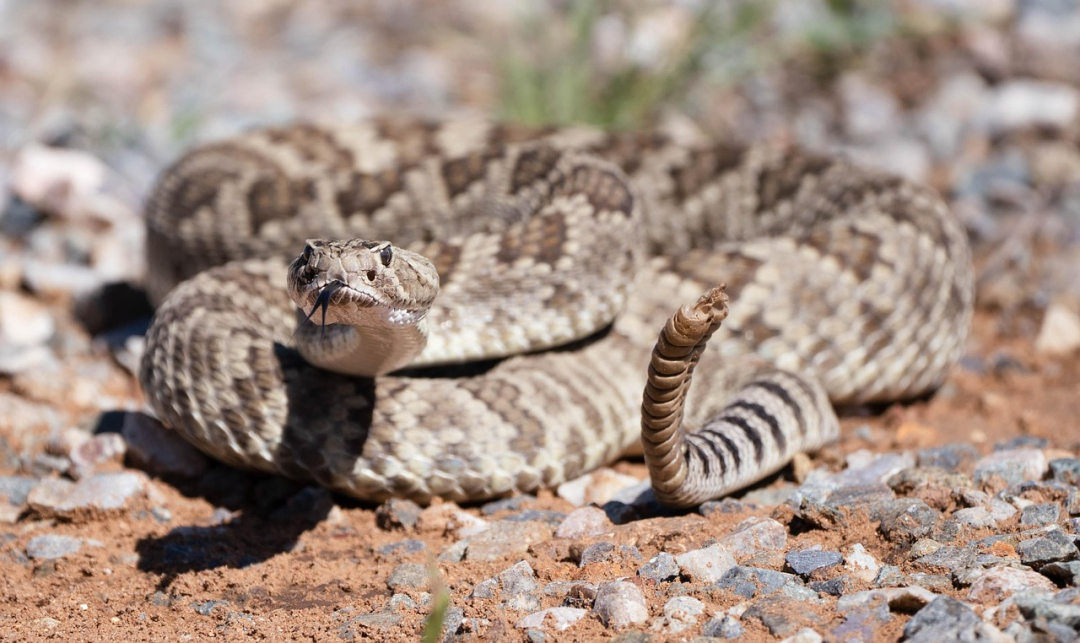
When your dog loves exploring outside, there is a risk in the US that your beloved pooch might come across a snake, and a common snake that can be found is the rattlesnake. And as you are probably aware, the rattlesnake is a venomous snake.
Rattlesnakes are common, and you might come across one when out on a hike, in the park, or even just in your backyard. And whereas we know to avoid a rattlesnake, your pup might not know how to react. Dogs are particularly vulnerable to snake bites as they are curious, often sniffing the ground.
And if you do get a rattlesnake bite on a dog, you will want to know what to do. Reacting quickly to venomous snake bites is crucial to prevent death and long-term health complications. In this article, we’ll also take a look at what a rattlesnake bite looks like on a dog and the symptoms of a rattlesnake bite.
Rattlesnake venom is hemotoxic. This term means that a rattlesnake bite on a dog can destroy tissue, impair blood clotting, and cause significant internal bleeding. If your dog is bitten by a rattlesnake, they might not get any venom (known as a dry bite), or they can get envenomated. However, it is always best to assume that there could be venom in the bite, and you should take the bite seriously and seek immediate veterinarian assistance.
Try to keep your dog calm and stop them from moving around too much. They will start to get panicky if you panic as well. If their heart rate becomes elevated, the venom will spread quickly. So, try to get them to sit calmly rather than walking or running around. Increased circulation will accelerate the effects of the venom. Try to get your dog to a vehicle to get them to the emergency veterinarian, and carry them if you can.
It’s key to keep the number of your emergency veterinarian phone number with you so you have it handy in emergencies. Contact your nearest veterinarian clinic and let them know you’re bringing in your dog with a rattlesnake bite. This allows the staff to prepare antivenin and be ready the moment you arrive. If you don’t have an emergency veterinarian, use a GPS pet emergency app or search Google for an emergency veterinarian.
Try to keep the rattlesnake bite on the dog lower than your dog's heart. If you can get someone to hold your dog in the car with the bite below the heart, and keep the dog as still and as calm as possible.
Signs that you might notice of rattlesnake bites on dogs include pale gums, a weak pulse, rapid breathing, and your dog might also collapse.
You might not have seen your dog get bitten, especially if they’ve got a bite from a rattlesnake in your backyard while your dog was playing, for example, or when out exploring overgrown areas on hikes. If you see any of these symptoms in your dog, see a veterinarian promptly.
There are some myths out there, and it’s important to know what not to do, so don't:
When you arrive at the emergency veterinarian, they will provide antivenin (antivenom), which will neutralise the venom, but it is most effective when given early. IV fluids support blood pressure. They might also provide antibiotics, which can help with infection at the wound site, and pain medication. The veterinarian will watch for tissue necrosis or internal bleeding. Recovery times can vary depending on the size of your dog, the amount of venom injected, and the time to treatment.
There are many ways in which you can help protect your dog from rattlesnakes, which is particularly important if you live in an area where it is more likely that you will come across these venomous snakes. Avoid letting your dog roam into wild areas and tall grasses where rattlesnakes might be hiding. This is especially true in spring to fall when rattlesnakes are generally more active.
If your beloved pooch gets bitten by a rattlesnake, it can be a scary experience, but it is important that you stay calm, keep your dog calm and still, and seek emergency veterinarian treatment straight away. With the right treatment promptly, a rattlesnake bite is much less likely to lead to long-term complications or death.
If you live in an area where there’s a higher risk of coming across a rattlesnake, you can take some precautions, such as a vaccination, which can reduce complications, rattlesnake training for your dog, and being careful when outdoors to keep your dog away from long grass and wild areas. Be aware also of the symptoms in case your dog gets a rattlesnake bite and you don't see it. If you suspect a rattlesnake bite on a dog, then seek prompt veterinarian care. If in doubt, it is better to be safe rather than sorry and get to your veterinarian straight away!
11 September, 2025