
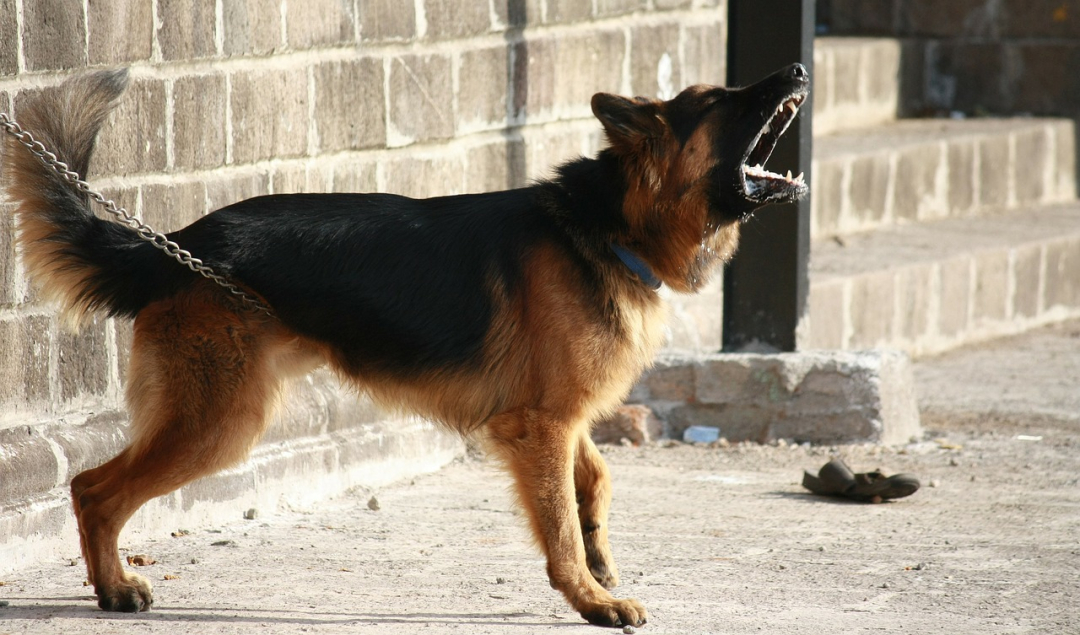
As a dog owner or dog breeder, you might wonder why dogs bark at nothing? You might be sitting down to focus, perhaps working from home or watching TV, when your dog races over to the window and suddenly starts barking. You check outside, but there’s nothing there. No people, no animals, no obvious reason at all. Or you might be on a walk, and your dog stands still and starts barking, again for no apparent reason.
If your dog seems to be barking at “nothing,” the truth is there’s almost always something behind it. Dogs experience the world very differently from humans do, and what looks like empty space to you can be full of sights, sounds, and smells to them.
In this article, we take a closer look at why dogs bark at nothing and what you can do about it.
The biggest reason dogs bark at “nothing” is simple: they’re picking up on things we can’t detect! Dogs possess an impressive array of senses, including an extraordinary sense of hearing. They can detect higher frequencies and much quieter sounds than humans, and so can often hear things that we can’t.
That means your dog might be reacting to a squirrel scratching on a fence, a neighbor closing a car door down the street, high-pitched electronic noises from devices, or even rodents moving inside walls. To you, it’s silence, but to your dog, it can all sound quite noisy!
Dogs also don’t see things the way we do, they don’t see the same level of detail or color as humans, but they excel in low-light conditions. Their eyes are built to detect movement, especially at dawn, dusk, or nighttime. So when your dog barks into a dark yard, they may actually be seeing a raccoon or deer moving in the distance, a person walking far away, or even leaves or shadows shifting in the wind.
A dog's sense of smell is remarkable, and its nose is arguably its most powerful tool. Their sense of smell is thousands of times more sensitive than yours, allowing them to detect other animals that passed through hours earlier, as well as hormones and pheromones, food, or trash from far away, and changes in their environment.
Dogs also have a specialized organ, called the vomeronasal organ, that helps them detect chemical signals we don’t even realize exist. So yes, your dog might absolutely be barking at a scent trail you have zero chance of noticing!
Some personalities and breeds are more vocal, and some breeds, like Terriers, Beagles, and Siberian Huskies, are naturally more vocal. These dogs were often bred for alerting, guarding, or hunting, so barking is part of their instinctive behavior.
Some dogs are particularly vocal at nighttime. Nighttime barking can feel especially frustrating, but it often has a clear explanation. At night, the environment is quieter, so small sounds stand out more, wildlife is more active, such as raccoons, foxes, or coyotes, and your dog’s senses are even more tuned in at night.
Dogs might bark more at night when they need a bathroom break, are uncomfortable or ill, lonely, or suffering from separation anxiety. They might also be reacting to other dogs barking nearby. If your dog only barks at night, it’s worth observing patterns to pinpoint the cause.
The window is basically your dog’s personal TV, and sometimes, it’s a high-stimulation one. Dogs often bark to warn off perceived intruders, whether that’s a delivery driver or a passing dog. If your dog lacks mental stimulation, they may fixate on outside activity for entertainment. Some dogs feel stressed by unfamiliar sights and sounds. Seeing something they can’t reach, like a squirrel which can trigger excited barking, and if barking gets a reaction from you, your dog may repeat it.
If your dog suddenly barks at you, they are usually trying to communicate with you. They might be trying to say they’re hungry, need to go outside, want to play, or that something is bothering them. However, if it becomes constant, your dog may have learned that barking gets results. In this case, it’s important to avoid reinforcing the behavior unintentionally.
If your dog suddenly starts barking and growling, take it seriously. Possible reasons include a perceived threat, like a stranger or unfamiliar animal, protective or territorial instincts, fear or anxiety, or pain or discomfort. Pay attention to body language as it can give you clues about what your dog is feeling. You might need to seek advice from a dog obedience trainer or your local veterinarian if you are concerned about your dog’s behaviour.
Before trying to stop the behavior, it’s important to understand that barking is normal. The goal is to manage it appropriately. First of all, don’t punish your dog; instead, acknowledge their alert by calmly speaking to your dog, checking the environment, and showing your dog there’s no threat. Then use positive reinforcement obedience training to teach your dog how to stop barking.
You can teach a command, like “quiet” or “enough”. Let your dog bark briefly, then say “quiet” in a calm, firm voice. When they stop, even for a second, reward them with a treat and then repeat this consistently. Over time, your dog will associate silence with rewards.
You can also reduce triggers, so if your dog fixates on the window, consider closing the blinds or curtains, using frosted window film, or limiting access to high-trigger areas. Less exposure often means less barking. Also, make sure you provide enough mental and physical stimulation, as a tired dog is a quieter dog.
Ensure your dog gets plenty of daily walks, has a variety of interactive toys, training sessions, and plenty of playtime and enrichment. If your dog starts barking, redirect their attention with their favorite toy or engage them in a short activity.
When your dog barks at nothing, it’s rarely “nothing” from their perspective. Their amazing senses, instincts, and habits are all at play. Think of barking as a form of communication. Your dog might detect something you can’t, be reacting to their environment, or expressing a need. Once you understand why your dog or puppy is barking, then you can manage the behaviour effectively, and keep your home a little quieter in the process!
16 January, 2023