
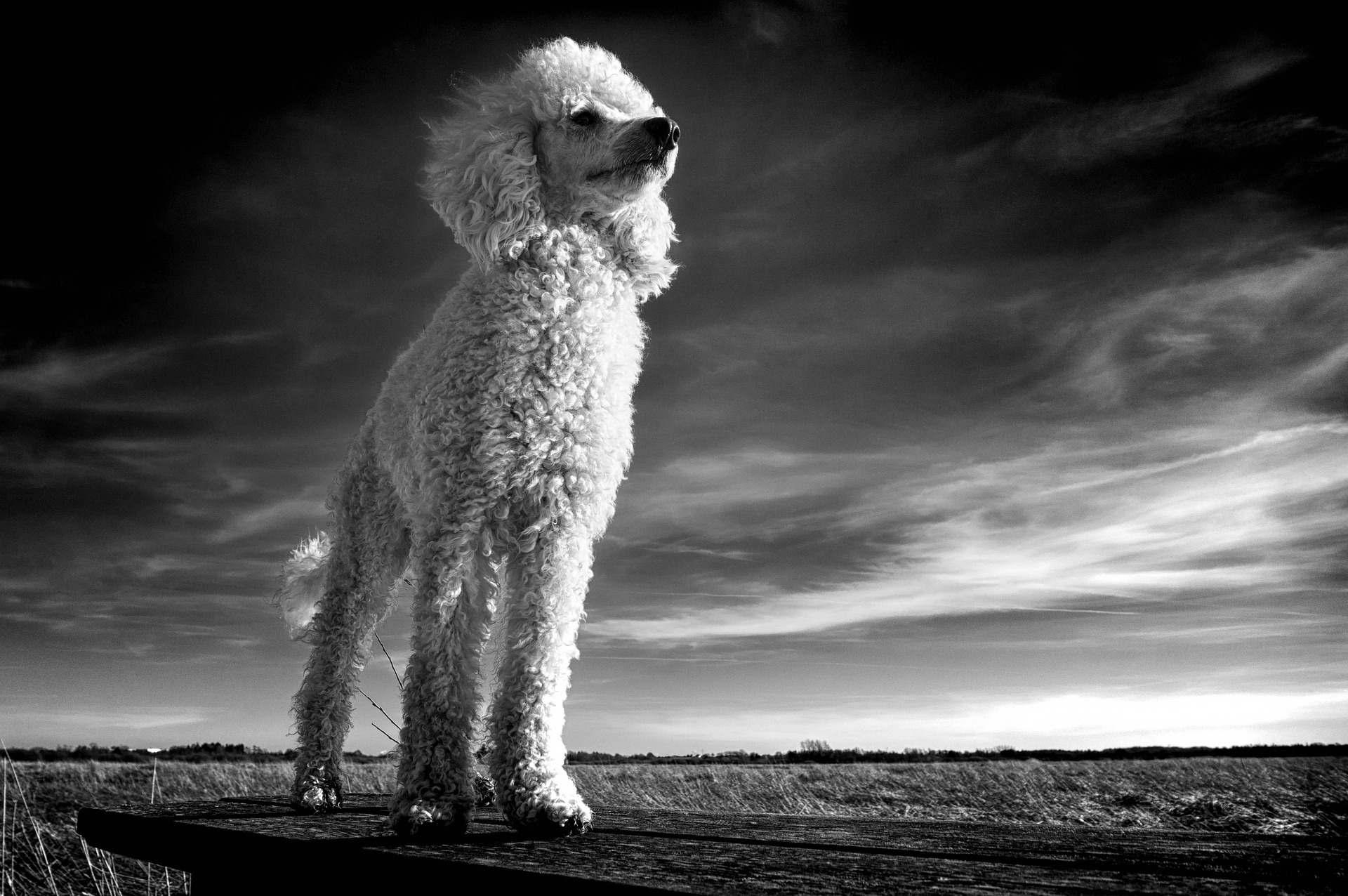
Poodles are a well-recognized dog breed, and when you picture a poodle, you might see an elegant small companion with clipped hair. But you might be wondering, what were poodles bred for? Was it the iconic curly coats or something else? The poodle dog breed is also known for its intelligence, athleticism, and practical nature.
In this article, we take a look at poodle origins and consider how remarkable the poodle breed is. From their early origins to the modern-day poodle in its various sizes and roles. What makes the poodle dog breed so special and a beloved, recognisable pooch?
When considering what poodles were bred for, we should take a look at the origins of the poodle breed. The poodle originates from Germany, and the name comes from the German word ‘pudel’, which means to ‘splash in water’. In Germany, they were often called Pudelhund, which translates as ‘water dog’.
This demonstrates their early use as hard-working hunting dogs to retrieve waterfowl for hunters, such as ducks or geese, which may fall in the water. Their muscular and agile build makes them excellent hunting dogs. The poodle breed has a natural ability to swim long distances, and they are also intelligent with a calm nature that remains even under pressure. Their ability to follow commands carefully and obediently means they can retrieve game without damaging it.
The poodle breed was later refined in France, where the elegant appearance of the poodle was developed. The breed is loved for its appearance, intelligence, obedience, and, therefore, ability to train. The poodle dog breed is seen as both a companion and a working breed.
The poodle’s intelligence and keen sense of smell made them excellent truffle hunters in France, where they were employed to sniff out rare and valuable mushrooms in forests. They also adapted to dog sports and tasks requiring obedience, agility, and problem-solving, proving themselves as some of the most trainable dogs in the world.
When considering what poodles were bred for and where they are from, we can see that the poodle’s adaptability explains why they have thrived in so many roles beyond hunting. They have even become performers in circuses, excelling at tricks and routines due to their intelligence, focus, and willingness to learn. Smaller poodles were often favored as companions or entertainers, providing joy and amusement while maintaining the physical traits of their larger ancestors.
Poodles today come in three sizes: standard, miniature, and toy, each with their roots in the breed’s original working roles. Standard poodles are the largest size, originally bred for hunting waterfowl. Their size and strength made them ideal for swimming in lakes and rivers, retrieving heavy birds, and enduring long hours outdoors.
Miniature poodles were often used for smaller game or as household companions. Their size made them more agile in tighter spaces while retaining the intelligence and trainability of their larger relatives. Toy Poodles are the smallest variation, primarily developed for companionship; they have inherited the breed’s keen intelligence and loyalty, becoming highly adaptable and affectionate pets.
A recognizable aspect of today's poodle breed is the “poodle clip,” often seen in dog shows, which has practical roots dating back to the breed’s working days. The elaborate patterns seen on traditional poodles were originally designed to protect the dog while swimming and retrieving game. The thick tufts of hair on a poodle's chest, hips, and joints were originally to insulate vital organs and limbs from cold water, while other areas were shaved to reduce drag, making swimming easier and more efficient. Even the famous pom-poms on the legs and tail had a functional purpose, acting as insulation for key joints while allowing the dog to move freely.
Over time, what began as a practical necessity evolved into a symbol of elegance. Groomers and breeders have refined the poodle clip, turning poodles into the sophisticated show dogs much admired today. While many modern poodles wear simpler trims for convenience, the historical clips remain a testament to the breed’s working roots.
Poodles have an extraordinary level of intelligence and are widely recognized as one of the smartest dog breeds in the world. They also have a strong work ethic and are obedient, making them highly trainable for hunting, performing, or participating in competitive dog sports. Poodles are frequently trained as service and therapy dogs due to their quick learning ability, paired with an empathetic temperament, which allows them to excel in roles that require both focus and emotional sensitivity.
Though poodles began as working dogs, their adaptability and obedience make them excellent companions for families. Smaller poodles, in particular, have been bred to provide affectionate companionship. As companions, poodles are known for their playful and fun personalities, and due to their intelligence and training abilities, they can make great pets for families.
One key feature of poodles is their hypoallergenic coat, which makes them a popular choice for homes across the U.S. today. The term hypoallergenic doesn’t mean that they are allergy-free, but rather that there is less risk of allergies from their coat.
The poodle is a much-loved dog breed, recognizable by their iconic coat clips but also known for their working heritage as a waterfowl hunting retriever. They are intelligent, obedient, and adaptable. When considering what poodles were bred for and where they are from, we can see how they are adaptable, from toy poodle companions to standard-sized poodles who are working dogs, making use of their athleticism and agility. They have even been known to work in circuses and also for hunting truffles.
For dog lovers, knowing the poodle's origins and history behind the poodle breed enriches every interaction with these extraordinary dogs, making every splash, trick, and curl a reminder of their remarkable past. If you’re looking for a puppy to join your family, then check out our puppies on Puppy Hero!
06 April, 2026