
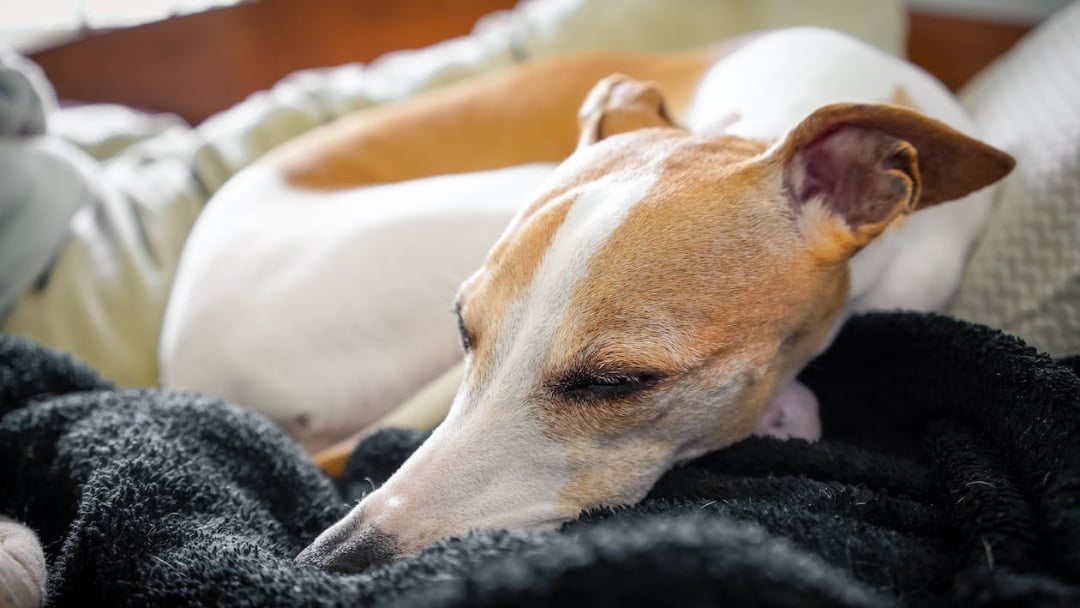
Have you ever noticed your dog twitching in their sleep? While sleeping peacefully, you notice their paws start paddling, or their whiskers start to quiver? Maybe they let out a soft bark or a little whimper while their eyes flicker beneath closed lids. If you’ve noticed this common dog behavior, you might be wondering why do dogs twitch in their sleep?
In most cases, sleep twitching is completely normal and even a sign that your dog is getting a healthy, restorative nap! However, there are times when twitching could signal something more serious. In this article, we take a look at why do dogs twitch in their sleep to help you know when to feel confident that your dog is relaxed and happy, or when you need to call your veterinarian.
The most common reason for why dogs twitch in their sleep is that your dog is having a brief involuntary muscle spasm, called myoclonus. These small, sudden movements can affect one part of the body, like a back leg or the tail, and can occasionally involve the whole body.
Just like people, dogs experience muscle twitches as they move between sleep stages or during dreaming. You might notice their paws paddling as if running, snoring, their tail wagging, their whiskers twitching, soft barking or whimpering, or light body jerks. These movements are typically harmless and short-lived, and usually just a normal part of dreaming.
Other possible reasons for why dogs twitch in their sleep can also include anxiety or stress, overstimulation during the day, fear triggered by loud noises such as thunderstorms or fireworks, normal growth and development in puppies, and aging in senior dogs.
In rare cases, twitching may be linked to medical concerns such as arthritis or muscle stiffness, epilepsy, kidney or liver disease, diabetes, or exposure to toxins. If your dog's twitching in their sleep appears intense, prolonged, or paired with other unusual symptoms, a veterinary evaluation is recommended.
Dogs, like humans, cycle through two main stages of sleep. Non-REM (Rapid Eye Movement) sleep is lighter and more restorative, while REM sleep is the dream stage. Most twitching occurs during the REM sleep stage when your dog’s brain is highly active, even though their body is resting which is when vivid dreams happen.
On average, dogs sleep between 12 and 14 hours per day, though puppies and senior dogs may sleep even more. During REM sleep, you might notice flickering eyelids, gentle body twitches, paw movements, and soft vocalizations. These signs typically mean your dog is deeply relaxed and dreaming.
If your dog is twitching in their sleep, you should let your dog continue sleeping. Twitching during sleep usually means your dog is in a deep, restorative stage of sleep. Interrupting that sleep can be disruptive and unnecessary. They might sometimes be startled, but veterinarians generally advise against waking a dog that is twitching unless they are clearly in distress. Some dogs can react defensively when they are suddenly woken during sleep, so call their name gently from a distance to wake them.
Normal sleep twitching tends to last less than 30 seconds, occur intermittently throughout the night, and involve gentle or moderate movements. It’s common for dogs to paddle their legs briefly as if running in a dream, then settle back into stillness. And you will probably find yourself wondering what your beloved pooch is dreaming of!
If you notice sustained twitching lasting longer than a minute, rigid or stiff limbs, violent shaking, and then you have difficulty waking your dog and find your dog is disoriented after waking, then you should consult your veterinarian. You could record a short video to show.
Research suggests that dogs dream about everyday experiences. Just like people, dogs process daily events during sleep. If your dog spent the day at the park, playing fetch, or meeting new friends, those experiences may replay during REM sleep. That’s why you might see running paws or hear playful barks. Dreaming is actually a healthy brain function. It helps dogs process memories and learn from their experiences.
If your dog is having a good dream, then you will likely see twitches that look like short, rhythmic paw paddling, gentle tail wagging, and soft, excited noises. Signs of a bad dream include whining or whimpering, growling, sudden sharp movements, or signs of tension. Still let them sleep through the dream, though.
Most twitching during sleep is completely normal. However, you should contact your veterinarian if you notice twitching that increases in frequency or intensity, episodes lasting longer than a minute, behavioral changes, loss of coordination, excessive thirst or urination, and other symptoms like vomiting or lethargy.
One of the biggest concerns for pet owners is distinguishing normal sleep twitching from a seizure. You can identify a seizure because the dog's movements look very different from normal dream movements, such as stiff, rigid limbs, more forceful, repeated jerking, loss of bladder or bowel control, foaming at the mouth, vomiting, and confusion or disorientation after waking.
Seizure activity often lasts longer than a few seconds and does not stop when the dog is awakened. If you suspect a seizure, contact your veterinarian immediately. Recording a video can be extremely helpful for diagnosis.
So, why do dogs twitch in their sleep? For most of the time, it’s just a lovely sign of your dog dreaming and experiencing healthy REM sleep. Those adorable paw paddles and soft barks are usually your dog reliving happy moments from the day, like jumping into a puddle or running around with a stick in the park! While occasional twitching is normal, if you are concerned, you can take a video and consult your veterinarian to rule out any underlying health issues.
Otherwise, next time you see your dog twitching during a nap, you can smile and think about what joyful times they might be dreaming about!
17 December, 2022