
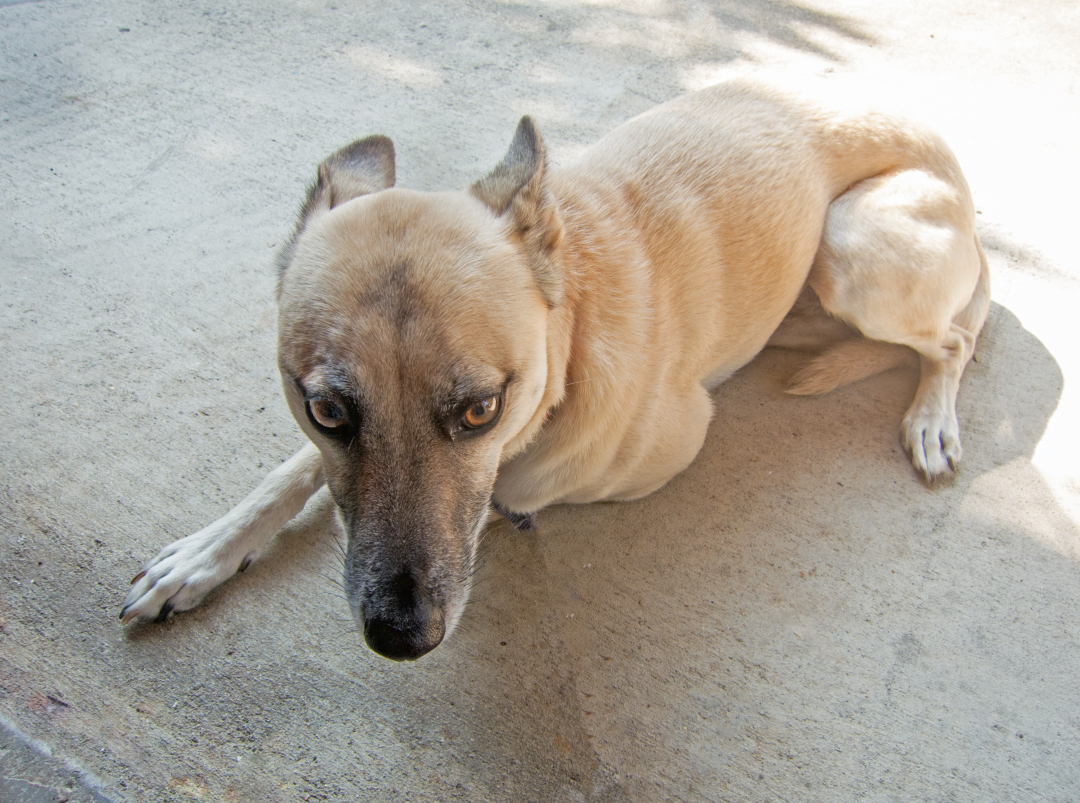
If you’ve ever noticed your dog pinning their ears back, you might have wondered what it means. Are they scared, sad, happy or just relaxed? Dogs communicate primarily through body language. Their ears, eyes, tail, body posture, and even subtle facial expressions can all help your dog communicate. A dog’s ears can reveal a lot about how they’re feeling, but only when you look at them in context.
In this article, we take a look at why dogs put their ears back, what it might mean, and what your dog might be trying to tell you.
In general, a dog’s ears reflect their level of comfort, attention, and emotional state. Forward or upright ears usually signal alertness or curiosity. Slightly pulled-back ears can indicate friendliness or a submissive nature. However, when ears are pinned tightly against the head, it often indicates stress, fear, or discomfort.
The key is to observe what else is happening. Is your dog’s body loose or stiff? Is their tail wagging high or tucked low? Are they making eye contact or avoiding it? These additional cues help you interpret the meaning behind the ears.
Dogs can experience both sadness and disappointment, and their body language often reflects it. Ears may droop or pull back slightly when your dog is feeling down. This can happen in everyday situations, like when you leave for work, cancel a walk, or don’t let them play with another dog. Or in sadder moments like the loss of a companion. In these moments, the ears aren’t tightly pinned but rather relaxed and slightly back, paired with a subdued posture.
Anxiety or Nervousness
Anxious dogs often pull their ears back as part of a broader stress response. You might notice additional signs like lip licking or tongue flicking, panting when it’s not hot, a lowered or tucked tail, restlessness or pacing, and tense muscles. This can occur during thunderstorms, vet visits, or when meeting unfamiliar people. Some dogs also show this behavior when they’re overwhelmed by too much attention.
When a dog is truly afraid, their ears are usually pinned tightly back against their head. This is often combined with clear avoidance signals, such as avoiding eye contact, trembling or shaking, crouching or lowering their body, tucking their tail. It's important to be able to recognize fear-based ear positioning because it can escalate.
A frightened dog may resort to defensive aggression if it feels trapped or threatened. They might pull their ears back right before displaying aggressive behavior. In this case, the ears are usually tight against the head, and the rest of the body looks stiff and tense. Other warning signs may include growling or barking, a hard stare, raised hackles (fur along the back), and lunging or snapping.
In this context, ears back don’t mean submission; they're part of a defensive or offensive posture. It’s a signal to give the dog space. If you experience this behavior, consult an animal behavioral specialist or your veterinarian.
Interestingly, dogs often use ear position to communicate that they mean no harm. Slightly back ears, combined with a relaxed body, soft eyes, and maybe even a wagging tail, can signal friendliness or submission. You might see this when your dog greets another dog or person politely. It’s their way of saying, they’re not a threat.
Many dogs pull their ears back when they’re excited to see someone they love. If your dog greets you at the door with a wagging tail, wiggly body, starts licking or nuzzling you, and has bright, relaxed eyes, then those ears-back moments are actually a sign of happiness and affection.
Sometimes, ears that appear back are simply in a neutral, resting position. A calm, content dog may not hold their ears upright, especially if it’s lounging or feeling sleepy. Ear position varies widely by dog breed. Dogs with naturally upright ears may still look alert even when relaxed, while floppy-eared breeds can make it harder for you to judge subtle movements.
Dogs have highly mobile ears that can rotate to pick up sounds from different directions. Occasionally, a dog may pull their ears back slightly when trying to focus on a noise behind them. This doesn’t indicate emotion as much as concentration. If your dog hears something unusual, watch how their ears shift; they’re essentially “tuning in” to work out the noise.
If your dog suddenly starts holding their ears back more often, especially if it’s paired with sensitivity to touch, it could signal pain. Ear infections, injuries, or dental issues can cause discomfort that leads to protective body language. In these cases, you might also notice head shaking, scratching at the ears, shining, or irritability. If you suspect pain, it’s best to consult a veterinarian.
Dogs may instinctively pull their ears back to protect them. The ears are delicate and filled with blood vessels, so pinning them back can help prevent injury during rough play or perceived threats. This reflex can also appear when a dog feels vulnerable or is trying to make themselves smaller in a tense situation.
The most important takeaway is that ears alone don’t tell the whole story. To truly understand your dog, look at tail position and movement, their body posture - is it loose or stiff, their facial expression, their eye contact, and vocalizations.
Every dog has their own personality and communication style, so over time you will learn to communicate with your dog and build trust. If you’re concerned about your dog's behaviour, then consult an animal behaviourist or your local veterinarian.
When dogs put their ears back, they’re communicating something, which can range from joy to fear to relaxation. It’s important to take into account the context and your dog's full body language to better understand their emotions, respond appropriately, and strengthen your bond. Whether they’re greeting you at the door or feeling unsure in a new situation, those subtle ear movements are part of communication between you and your dog and essential for building a trusting and loving bond.
11 January, 2023