
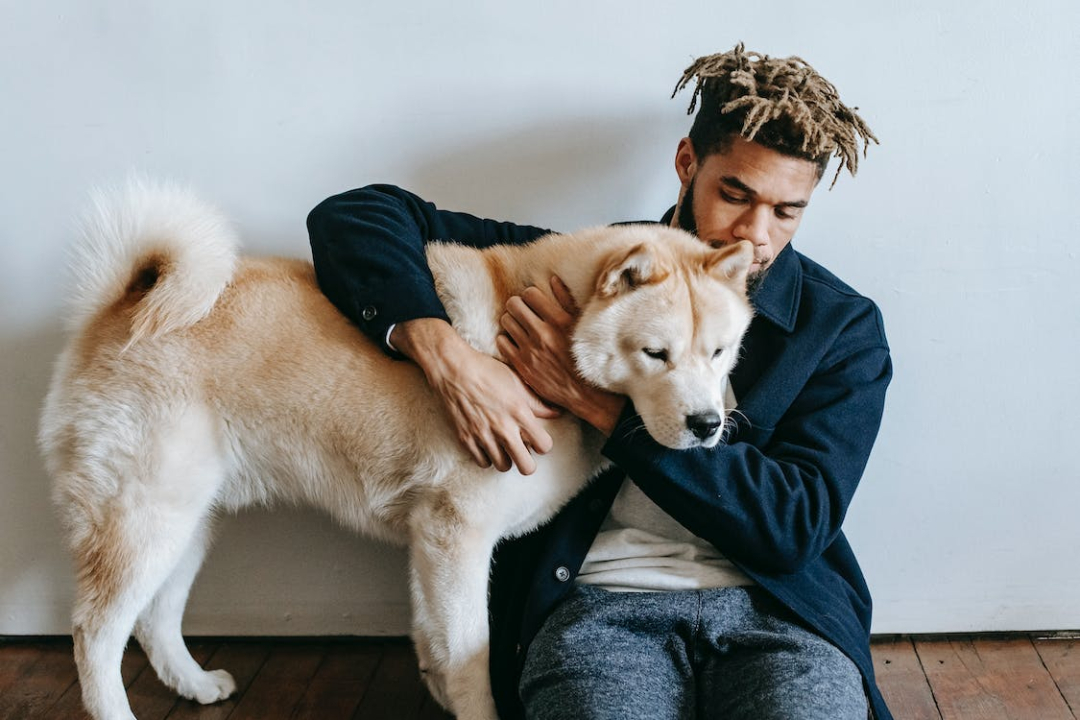
Why are dogs so loyal? This question has long fascinated pet owners, scientists, and animal lovers alike. Anyone who has ever shared their life with a dog has likely experienced that unmistakable devotion they have to you. They greet you excitedly at the door, are constant companions, and offer quiet comfort during difficult moments. You can just feel a dog's love and attachment when they curl up on the sofa with you after a long day and look at you with loving puppy dog eyes!
In this article, we examine why dogs are so loyal and consider them to be some of the most affectionate, intelligent, and loyal companions humans can have. So what exactly explains this remarkable bond?
Dogs are certainly among the most loyal animals humans live with. While other animals, such as horses, elephants, and even some birds, can form strong attachments to humans, dogs stand out for the consistency and intensity of their loyalty. Stories of dogs risking their lives to protect their owners or waiting years for a loved one to return are well-documented.
This loyalty isn’t just anecdotal. Research has shown that dogs are highly social animals capable of forming deep emotional connections with humans. Their ability to read human cues, respond to emotions, communicate with humans, and maintain long-term bonds makes them unique among domesticated animals.
There isn’t just one explanation for canine loyalty. Instead, it’s the result of a combination of their history, biology, and social behavior.
Just like dogs, wolves are able to form a mutually beneficial partnership with humans. For our ancestors, wolves helped with hunting and protection, while humans provided food and shelter. Over generations, wolves that were more tolerant of humans and more responsive to human behavior were more likely to survive and reproduce.
In domesticated dogs, loyalty is a built-in trait, a feature of their genetic makeup, and reinforced through selective breeding. Today’s dogs are genetically wired to form close attachments to humans, and their loyalty is not accidental.
This genetic influence also explains why some dogs bond more closely with one person in a household. Often, the primary caregiver, the one who feeds, walks, and spends the most time with the dog, becomes the center of that loyalty, like the pack leader in wolves in the wild.
Another key factor is that dogs are naturally pack-oriented. For wolves in the wild, survival depends on cooperation within a group. Wolves rely on their pack for hunting, protection, and raising their young. Loyalty to the group is essential. When dogs become part of a human household, they essentially view their family as their “pack.”
This instinct drives them to stay close, follow routines, and protect members of the household. This pack mentality also explains behaviors like following you from room to room, becoming anxious when separated, and seeking physical closeness or reassurance. From a dog’s perspective, staying connected to their pack is an instinct.
Dogs have a far more powerful sense of smell than humans and experience the world primarily through their sense of smell. For dogs, scent plays a major role in how they recognize and bond with people.
Scientific studies using brain imaging have shown that when dogs smell their owner’s scent, the reward centers of their brains become highly active. These are the same areas associated with feelings of pleasure and affection. So your scent literally makes your dog feel good, and over time, this creates a strong association between you and positive emotions and reinforces their loyalty.
Dogs don’t just act loyal, they feel it on a biological level. When owners and dogs interact, both experience oxytocin, the “bonding hormone”, which is also involved in parent-child attachment. This strengthens the emotional connection, making the bond natural and rewarding for both.
Even with all these explanations, some aspects of canine loyalty remain difficult to fully explain. For example, dogs often remain devoted even when separated from their owners for long periods or when cared for by others in the meantime.
There are also countless real-life stories of dogs waiting for owners who never return, maintaining their vigil for years. These behaviors suggest that canine loyalty goes beyond simple conditioning or dependency; it reflects a beautiful, deeper emotional capacity.
While all dogs have the capacity for loyalty, certain breeds are especially known for forming strong bonds with their owners. These include Golden Retrievers, German Shepherds, Labrador Retrievers, Beagles, Collies, Rottweilers, Saint Bernards, Boxers, Dachshunds, and Yorkshire Terriers.
These breeds have a variety of characteristics, which can mean that they can be generally more loyal. These include a mixture of being friendly, devoted, eager to please, intelligent, highly trainable, protective, affectionate, people-oriented, social, sensitive, confident, nurturing, and deeply attached to their families.
Loyalty is not necessarily limited to specific breeds; the above characteristics can be a good indicator of a loyal dog, and something to look for when you are choosing a new puppy to join your home. Choosing the right breed for your family takes a lot of consideration, as there are lots of important aspects to consider when finding the right breed of puppy to suit your family, home, environment, and lifestyle. A dog’s ability to be loyal also depends on the environment, upbringing, and their relationship with its owner as well.
A dog’s loyalty is the result of a unique combination of genetics, instinct, emotional connection and their upbringing. They are biologically wired to bond with humans, socially inclined to treat us as part of their pack, and emotionally capable of forming deep attachments. There’s something undeniably special about the way dogs love. Their loyalty is consistent, uncomplicated, and unconditional. Whether you’ve had a long day or been away for weeks, your dog’s response is the same - greeting you with pure excitement and affection!
05 December, 2022